In brief
- In a skin analysis your skin is looked at up close and talked through. You hear what kind of skin you have, what it needs and what you'd better leave alone.
- Your skin type is how your skin is by nature: dry, oily, combination or balanced. Your skin condition is the state your skin is in right now, and that changes.
- An online test or an app gives you a direction. What a camera doesn't see is your routine, your habits and how your skin feels.
- If you'd like to take a look yourself first, do our online skin quiz: five questions, free and no account needed.
- At Moons in Enschede the analysis is part of the first skin appointment. It takes an hour, costs €69.00 and always includes a treatment.
Written by Nilay, owner and beauty therapist at Moons BeautyUpdated on
What is a skin analysis?
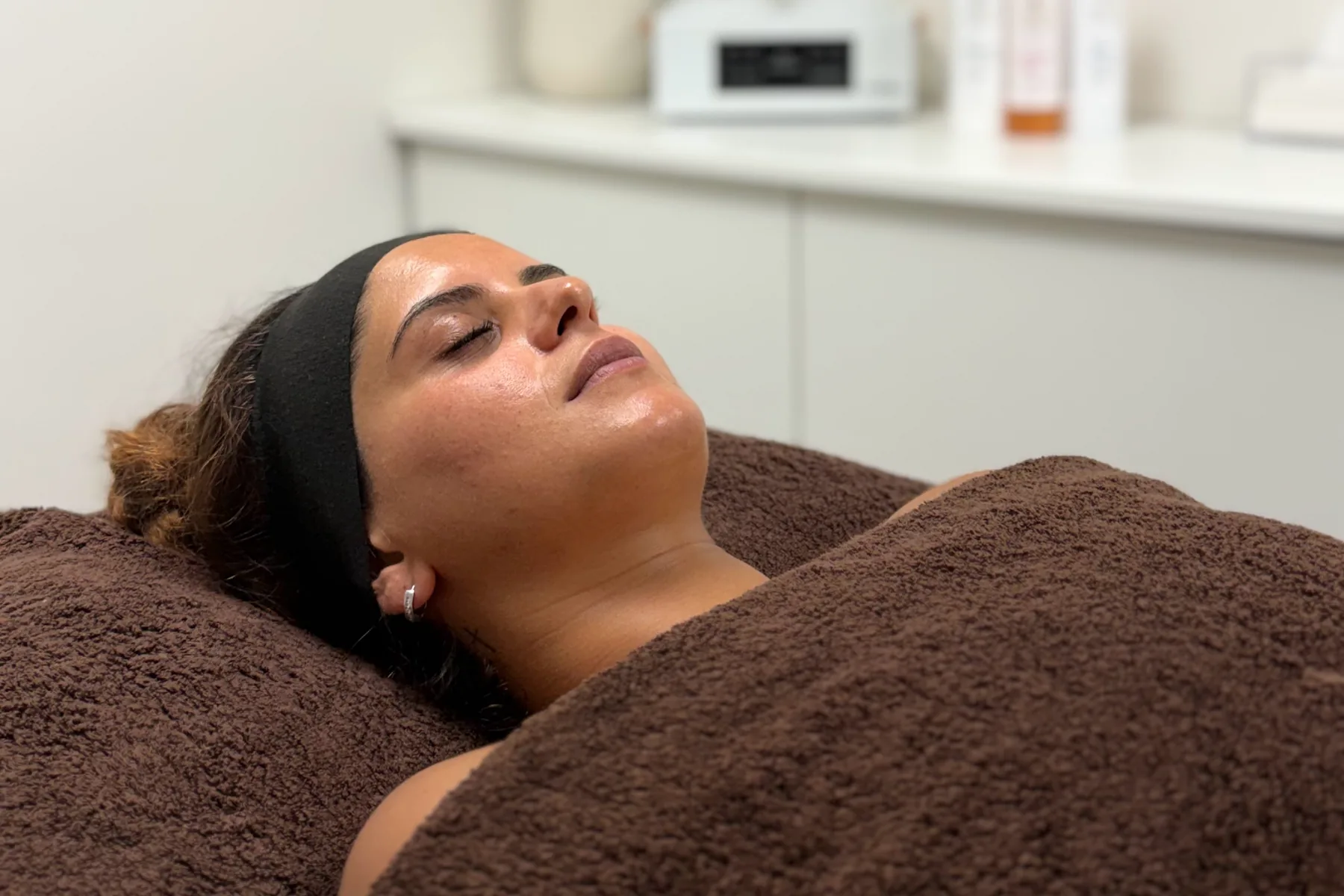
A skin analysis is an examination of your skin by someone who knows about skin. They look at what you can see: pores, shine, redness, marks, lines and dry patches. And they ask about what you can't see: what you put on your skin, how it feels after washing, what has changed lately.
Those two together lead to a conclusion. You hear what kind of skin you have, where your concerns probably come from and what suits them, at home and in the salon. A good analysis ends with an order: this first, that later, and this you can leave out.
The word is also used for a scan with a device and for a test with a selfie. Those are aids. They measure part of the picture, and only the conversation alongside turns it into an analysis.
Skin type or skin condition, what's the difference?
A lot of wrong purchases start here. If you think you have oily skin, you choose products that dry it out, while your skin may only be lacking moisture.
| Topic | Skin type | Skin condition |
|---|---|---|
| What it is | Your skin's nature: how much sebum it produces by itself | The state of your skin at this moment |
| Does it change | Slowly, over the years. Skin usually gets drier | Yes, with the season, your hormones, stress and what you put on it |
| Examples | Dry, oily, combination, balanced | Dehydrated, sensitive, blemish-prone, dull, with pigmentation or with lines |
| What you do with it | It guides your choice of cleanser and cream | It guides your choice of serum and treatment |
So oily skin can be dehydrated, and dry skin can have spots. What we see most often is under skin concerns.
What is my skin type? How to check it yourself.
Cleanse your face gently during the day, put nothing on it and wait an hour or so. Then look in daylight and feel with clean fingers. These are the four types you may come across.
Dry
Your skin feels tight after washing, or flakes. Pores are barely visible. If you put nothing on, your face soon feels taut. There's more about this under dry skin.
Oily
Your skin gets shiny within a few hours, all over your face. Pores are easy to see and make-up quickly wears off. Have a look at oily skin.
Combination
A shiny T-zone, so forehead, nose and chin, and drier cheeks. Many people recognise themselves in this.
Balanced
Few problems, and your skin feels comfortable. It doesn't shine and doesn't feel tight. This is also called normal skin.
And sensitive skin, is that a skin type?
Sensitivity isn't a fifth skin type. It's a trait that can go with any type. Oily skin can be sensitive, and so can dry skin. You recognise it by skin that quickly turns red, stings or reacts to all sorts of things.
Sometimes skin is sensitive by nature. Often it has become sensitive: too many acids, a scrub on top, hot water, a different product every time. Then doing less helps more than buying something new. How to tackle that is under sensitive skin.
Online test, app or scanner: what they can and can't do
There are many ways to have your skin assessed. Each one gives a different piece of the picture.
| Topic | What it does | What it misses |
|---|---|---|
| Online questionnaire | Turns what you tell it about your skin into a direction. Our skin quiz works like this | What you don't see yourself or judge differently |
| App with a selfie | Recognises lines, marks, redness and shine in a photo, and gives a score | Light, camera and make-up change the outcome. The advice usually consists of the brand's own products |
| Skin scanner or measuring device | Measures moisture and sebum, for example, or makes pigment visible with special light | It's a snapshot. A number doesn't tell you where it comes from |
| Looking and asking | A specialist looks at your skin up close and asks about your routine and what has changed | Numbers to compare with later. A photo at the first appointment solves that |
We work without a device or camera. We look with the naked eye and ask further questions, because half the story is in your routine and your habits.
Skin type 1 to 6, that's something else.
If you search for your skin type, you'll also come across a test with six types, numbered 1 to 6. That's the Fitzpatrick classification. It says how your skin reacts to the sun: from very fair skin that burns quickly to very dark skin that almost never burns.
You use that classification for sun protection, and practitioners use it to estimate how skin will react to a peel or laser. It says nothing about dry or oily. So you can have skin type 2 for the sun and combination skin for your skincare.
Which protection suits you is explained in sun protection for your face.
How does a skin analysis work with a beauty therapist?
Every salon does it in its own way. These four things are the signs of a good analysis.
Your skin is examined without make-up
Make-up comes off. They look up close, including along your jawline, your neck and the side of your nose.
They ask further questions
What do you use, how often and since when? Sleep, work, hormones and medication all count. Bring a photo of your products, it makes talking easier.
You get an explanation you understand
You hear what can be seen and what may be behind it, in plain words. You can ask anything.
You leave knowing the order
What you do at home, which treatment suits and what that costs. Good advice also includes what you can cut out.
What does a skin analysis cost?
That varies. A test in an app is free, and a scan in a shop often is too. In a salon you pay for the time, and usually a treatment is included. That's how it works with us.
| Topic | Price at Moons | Duration | What you get |
|---|---|---|---|
| Online skin quiz | Free | Five questions | A direction: which treatment usually suits, with price and duration |
| First skin appointment | €69.00 | 60 minutes | The analysis, a treatment that suits your skin and a plan for home and afterwards |
| Facial on advice | The price of the treatment we choose together | 60 minutes | We take a quick look at your skin, choose together and then do that treatment straight away |
After the first appointment you're not tied to anything. You book each further treatment separately. All prices are on the prices page.
Beauty therapist, skin therapist or dermatologist?
A beauty therapist looks at your skin with a view to skincare and cosmetic treatments. That's where you go if your skin is dull, dry, unsettled or tired and you want to know what suits it.
A skin therapist has paramedical training and also treats skin that is diseased or damaged, such as severe acne and scars. A dermatologist is a doctor. They establish what you have and treat it medically. You go there with a referral from your GP.
A mole scan is different again from a skin analysis. That belongs with your GP or dermatologist. A beauty therapist doesn't assess moles or marks. If she sees something she doesn't like, she refers you on.
How often should you have your skin checked?
Your skin isn't the same every year. In winter it's drier, in summer oilier. After a pregnancy, around the menopause or with different medication, everything can be different. What suited you two years ago may not suit you now.
A thorough analysis makes sense when you start, when your skin changes and when your routine no longer does what it did. In between it doesn't need to be as extensive. With us every facial starts with looking at your skin, so the plan is adjusted as you go.
A mark that's changing?
If you have a mole or mark that grows, changes colour or shape, itches or bleeds, see your GP about it. Don't wait for an appointment in the salon. The same goes for a rash that doesn't go away and for skin that suddenly reacts strongly.
Frequently asked questions about skin analysis
What is a skin analysis?
An examination of your skin by a specialist. They look up close and ask about your routine and your concerns. You hear what kind of skin you have, what it needs and what you'd better leave alone.
What is my skin type?
Cleanse your face gently, put nothing on it and look after an hour or so. If your skin feels tight, it's dry. If it shines all over, it's oily. If only your forehead, nose and chin shine, it's combination. If you notice little, it's balanced.
What's the difference between skin type and skin condition?
Your skin type is how your skin is by nature: dry, oily, combination or balanced. Your skin condition is the state your skin is in now, for example dehydrated, sensitive or blemish-prone. The condition changes with the season, your hormones and your skincare.
Can you do a skin analysis online?
For a first direction, yes. With a questionnaire or a photo you get an idea of your skin. Our skin quiz is five questions, free and no account needed. For the complete picture, someone looks at your skin in person.
How reliable is a skin analysis with an app or selfie?
An app recognises what can be seen in the photo, such as lines and marks. The outcome depends on the light and your camera. What you put on your skin and how it feels, an app can't see. The advice often consists of products from the brand that made the app.
What does a skin scanner measure?
That differs per device. Some measure moisture and sebum, others use special light to make pigment and sun damage visible. It's a snapshot that only means something with a conversation alongside it.
Do you use a device for the skin analysis?
No. At Moons we look with the naked eye and ask further questions. Half the story is in your routine, your work and your habits, and a device can't read that.
What does a skin analysis cost?
At Moons in Enschede the analysis is part of the 60-minute first skin appointment. It costs €69.00, with a treatment that suits your skin and a plan for afterwards. The online skin quiz is free.
Is a treatment included in a skin analysis?
With us, always. After looking and talking, we treat what your skin needs at that moment, within the same hour.
Do I have to buy something or take a course after a skin analysis?
No. At Moons we work without subscriptions or packages. You book each further treatment separately, and you're also welcome to get started with the advice at home first.
What should you bring to a skin analysis?
A photo of the products you use, or the products themselves. Ideally come without make-up. Think beforehand about what bothers you most about your skin.
Is sensitive skin a skin type?
No. Sensitivity is a trait that can occur with any skin type. You can have oily and sensitive skin, or dry and sensitive skin.
What is skin type 1 to 6?
That's the Fitzpatrick classification. It says how your skin reacts to the sun, from burning quickly to almost never burning. It has nothing to do with dry or oily.
Can your skin type change?
Slowly, yes. Most skin gets drier over the years. Your skin condition changes much faster: with the seasons, and sometimes from week to week.
Can a beauty therapist assess moles?
No. For a mole or mark that's changing, see your GP. They'll refer you to a dermatologist if needed.
How often should you have a skin analysis?
When you start, when your skin changes and when your routine no longer works. Think of a new season, a pregnancy or the menopause. At Moons we look at your skin again at every facial.
From reading to doing
What we do with this in the salon
First skin appointment
An hour with analysis, treatment and a plan for afterwards.
Online skin quiz
Five questions, and you see straight away which treatment suits you.
Facial
Six treatments side by side, chosen by what your skin asks for.
Skin concerns
From dry skin to pigmentation, with what suits each one.