In brief
- Sebum and dead skin cells together block a pore. With acne it goes deeper, with more inflammation and more pain.
- What we do depends on what dominates in your case. That's why we start with a skin analysis for €69.00.
- With deep cleansing and mild peels your skin becomes calmer and smoother. You usually see that after six to eight weeks.
- With deep, painful spots and scars you see your GP first. If a treatment is under way there, we're happy to work alongside it.
Written by Nilay, owner and beauty therapist at Moons BeautyUpdated on
Blemish-prone skin or acne what is the difference?
Almost every pore has a small sebaceous gland. If it makes more sebum than the pore can get rid of and dead skin cells stay behind, the opening gets blocked. If the pore stays open, the contents darken in the air and you have a blackhead. If it closes over, a hard white bump forms. And if bacteria get involved, it turns red and tender.
You see it mostly where you have the most sebaceous glands: on your nose, forehead and chin, and often on your jawline, chest and back too. Almost everyone has it now and then. If it keeps coming back in the same place, it's worth doing something about it.
The difference with acne lies in the depth and the inflammation. Blemish-prone skin mainly has blockages, with the occasional spot. With acne there are more inflamed spots at the same time, they sit deeper and more often leave something behind. We work on blemish-prone skin cosmetically. With acne we work alongside your GP.
Where blemish-prone skin comes from
Usually two or three things play a part at once. Which ones they are for you determines where we start together.
Hormones
Hormones control how much sebum your skin makes. That's why it flares up in puberty, around your cycle, when you start or stop the pill and in busy periods. Those spots remarkably often sit along your jawline and chin.
Adult acne
Blemishes at thirty or forty look different from those in your teenage years. You get fewer blackheads and more deep-set spots along your lower face, on skin that has become drier at the same time. The strong products from back then backfire.
Products that seal off the pore
Heavy creams, oils, some foundations and hair products on your forehead can seal off pores. You rarely see that straight away, because the bumps only appear two to four weeks later. That's why we go through your whole bathroom shelf together.
Cleansing too hard
Foaming cleansers, scrubs and toners with alcohol break down your skin barrier. Your skin responds with more sebum, and irritation on top. With oily skin that is also blemish-prone, this is the biggest pitfall.
Friction, sweat and heat
Think of a helmet, a face mask, a sports bra or your phone against your cheek. Pores don't cope well with friction and heat, with sweat on top. A short shower after exercise helps more than an extra product.
Picking and squeezing
Perfectly understandable, and yet it's the quickest route to a dark mark or a dent. What you press out at home, you often push in deeper too. In the salon we do that with steam and the right technique.
Treatments for blemishes at Moons
Cleansing and peeling do two different things. A deep cleanse removes what is stuck right now, and you see that the same day. A peel loosens dead skin cells, so pores clog up less quickly. So it works in advance. That's why we often start with cleansing and then move on to peels. What it will be for you, we decide together in the skin analysis.
Acne treatment
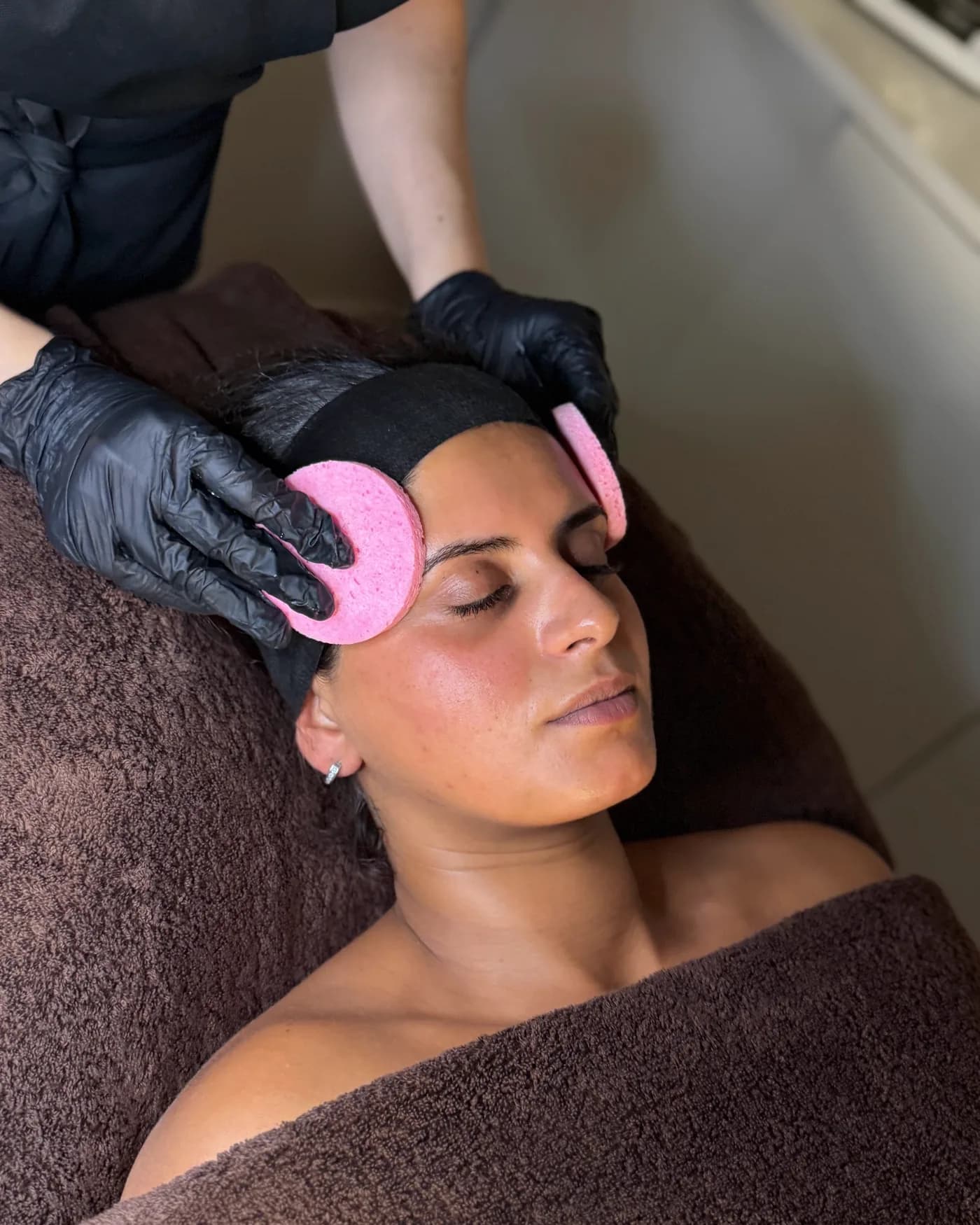
€75.00For unsettled skin this is the treatment chosen most often. After a double cleanse and a mild peel we open your pores with steam and carefully remove blockages. Afterwards LED and a mask calm your skin.
50 minutes4 to 6 times, every 4 weeksViewFull cleansing
€75.00Here we take more time for the work by hand, and afterwards you get a cooling hydrojelly mask. Good if you have a lot of blackheads and little inflammation.
60 minutesevery 4 to 6 weeksViewFirst peel 10%
€69.00Ten per cent fruit acids loosen dead skin cells, so pores open from the top. Ceramides and niacinamide keep your skin barrier intact. If you want to ease into peeling, start here.
50 minutes4 times, every 2 to 3 weeksViewGlow peel 23%
€79.00A step stronger, for skin that is already used to acids. This peel works on stubborn blockages and on the uneven texture that remains. Your skin may flake lightly for a few days afterwards.
50 minutes4 to 6 times, every 3 to 4 weeksViewNiacinamide+
€89.00Microneedling with ten per cent niacinamide, which refines pores and calms redness. We choose this once the spots have calmed down and it's mainly the marks and the texture that still bother you.
50 minutes3 to 6 times, every 4 weeksView
All prices are in the price list.
Which treatment suits your skin?
The difference lies mainly in downtime, in how sensitive your skin can be and in how often you come back.
| Topic | Works mainly on | For sensitive skin | Afterwards | Usual course |
|---|---|---|---|---|
| Acne treatment | Blackheads and active spots | Yes, we adjust pressure and pace | Slightly red for a few hours, no make-up that day | 4 to 6 times, every 4 weeks |
| Full cleansing | Lots of blackheads, little inflammation | Yes, this is the gentlest choice | Clean at once, you can carry straight on | Every 4 to 6 weeks |
| First peel 10% | Clogged pores and a rough texture | Yes, a gentle way to get to know acids | Sometimes a dry feeling for a day | 4 times, every 2 to 3 weeks |
| Glow peel 23% | Stubborn blockages, uneven skin | After discussing it, we build it up | Light flaking, two to three days | 4 to 6 times, every 3 to 4 weeks |
| Niacinamide+ (microneedling) | Enlarged pores, redness and marks after spots | Yes, calming by nature | Red for one to two days | 3 to 6 times, every 4 weeks |
We skip inflamed spots. We work around them and wait until it has calmed down. That costs a week, and it saves you a mark that stays for months.
Teenagers, adults and men
The pores are the same, the story around them differs. That's why we make a different plan for each age and situation.
Teenagers
If you're coming with a teenager, send us a quick WhatsApp beforehand. Then we discuss whether treatment makes sense right now. We keep it simple: a good cleanse, two products for home and an explanation of why picking backfires.
Adult acne in women
Around the age of thirty we more often see skin that is blemish-prone and drier at the same time. Strong products from your teenage years dry that skin out, and dryness in turn leads to more sebum. That's why we combine the treatment with hydration.
Hormonal phases
Around your cycle, after stopping the pill, in a pregnancy or during the menopause, your skin can suddenly change. That's down to your hormones, so you have nothing to blame yourself for. We prefer to plan treatments in the calmer weeks then.
Men
Men are just as welcome. Men's skin makes more sebum on average, so the cleanse can be more thorough. Shaving plays a part too, because ingrown hairs and spots get mixed up. How an appointment goes is explained under practical information.
When will you see a difference?
Your skin renews itself in about four weeks. That pace determines when you see what. It's also the reason one treatment is rarely enough.
Straight after the first time
Clean, and sometimes briefly red
The blackheads that could come out have come out. Where we've worked, your skin can be red for a few hours. It's better to leave make-up off that day, so many people plan their appointment for the end of the day.
Week 1 to 3
A phase that can give you a scare
With some people, something that was already under the skin still comes out. That's called purging. You then see the same kind of spots in your usual places, and within two to three weeks it clears up. If spots appear where you never had any, it's more likely irritation from a product. Let us know before you stop using anything.
After 6 to 8 weeks
The first real progress
After two or three treatments you see fewer new blackheads, pores that fill up more slowly and a smoother texture. Take a photo in daylight at the start. After all, you can barely see a gradual improvement in the mirror.
After 3 to 4 months
The result of the course
Then we put your starting photo next to it. What often remains are red or dark marks where old spots were. Those fade at their own pace, and we work on those afterwards.
After that
Holding on to what you've built up
For most people a treatment every six to eight weeks is enough, together with a routine you keep up. If something changes in your hormones, your medication or the season, we adjust the plan.
What is left behind after a spot?
Two things are often mixed up here. A red or dark mark is colour. Your skin made extra blood vessels or pigment there in response to the inflammation. The surface feels smooth and it fades by itself, although that takes months, and longer still on darker skin.
An acne scar is shape: a dent or a raised area, because tissue has been damaged. That doesn't improve by itself. With microneedling and stronger peels we make the texture softer. We can't promise you completely flat skin, and we only start on it once the inflammation is over.
The same applies to the coloured marks as to pigmentation: sun protection every day and active ingredients that inhibit pigment. What that delivers, you can see in the results.
What does it cost to treat blemish-prone skin?
You pay per treatment, so you're not tied to anything. A course costs roughly the amounts in this table. On top of that comes the first skin appointment for €69.00, because that's where we start.
| Treatment | Per session | Usual course | Full course (estimate) |
|---|---|---|---|
| Acne treatment | €75.00 | 4 to 6 sessions | €300.00 to €450.00 |
| Full cleansing | €75.00 | 3 to 4 sessions | €225.00 to €300.00 |
| First peel 10% | €69.00 | 4 sessions | €276.00 to €276.00 |
| Glow peel 23% | €79.00 | 4 to 6 sessions | €316.00 to €474.00 |
| Niacinamide+ | €89.00 | 3 to 6 sessions | €267.00 to €534.00 |
See this as a guide. How often you need to come depends on your skin and on what you do at home. Cosmetic treatments are not covered by insurance. The current prices are on the prices page.
Your routine at home does most of the work
Between two treatments there are four weeks, and then it's your turn. We give you a routine with as few products as possible, because a short routine is one you keep up.
Morning
- Rinse with lukewarm water or a mild cleanser, without your skin squeaking afterwards
- Apply a light serum, for example with niacinamide
- Use a moisturiser, even if your skin feels oily
- Finish with sun protection SPF 30, especially in a period with acids
Evening
- Double cleanse if you wear make-up or sun protection: first an oil or balm, then your cleanser
- Apply your active product to dry skin, with salicylic acid or retinol in consultation with us
- Use that product on two to three evenings a week for the first few weeks
- Finish with a cream that repairs your skin barrier, and leave your face alone
Start with one new product at a time and give it four weeks. If you add three at once and your skin reacts, you won't know which product did it. If you're unsure about what you're using now, send a photo along via the skin quiz.
Good to know about blemish-prone skin
A blackhead is sebum that turns dark
The dark colour is sebum oxidising in the air, so it isn't dirt. Washing more often and harder dries out your skin, after which it makes extra sebum. Cleansing mildly twice a day is enough.
Diet plays a part for some people at most
It has never been shown that chocolate gives you spots. There are indications that lots of fast sugars and dairy play a part for some people, although that is something different from a cause. Dietary advice isn't part of our trade.
After the sun, pores actually clog up faster
The sun temporarily dries out your skin and masks redness, so it seems a bit better for a while. Afterwards your skin makes more sebum and the outer layer thickens, so pores clog up faster. Sun on a spot that has only just become inflamed also more often leaves a dark mark.
Leave a spot that hurts alone
Squeezing sometimes saves you a few days, and at the same time you push part of the contents deeper into the skin. That is exactly what makes the inflammation bigger, and the chance of a dent too.
Oily skin needs moisture too
Oil and moisture are two different things. Skin with too little moisture makes more sebum in response, and then you're stuck in a cycle. How that works is explained under oily skin.
Beauty therapist, skin therapist or dermatologist?
Before you book anywhere, it helps to know who does what.
A beauty therapist works cosmetically: cleansing, removing blockages, peels, microneedling and advice about your skincare. That is our trade. Cosmetic treatments are not covered by insurance.
A skin therapist has paramedical training and more often works on referral, for example for severe acne or scars. Supplementary insurance sometimes covers part of that. In Enschede there are separate practices for that.
A dermatologist is a doctor: they determine what you have and treat it medically, for example with prescription products or isotretinoin. For that you need a referral from your GP.
That works perfectly well together. Many people come to us for the cleansing and the texture, while their doctor takes care of the medical side. If you're unsure where you'd be best off, send a photo along via the skin quiz or send us a quick WhatsApp. You can read who we are on the page about Moons.
When to see your GP first?
See your GP first if your spots are deep and painful, if lumps form under the skin, if spots leave dents or scars behind, if your skin changes dramatically for no reason, or if it makes you feel low. That last one counts just as much. If you use medication for your skin, such as isotretinoin or a course of antibiotics, tell us beforehand. Your skin is then more vulnerable, so we adjust the treatment or wait a while. If you are pregnant or breastfeeding, we stick to a mild cleanse.
Frequently asked questions about blemish-prone skin
Where can you have blemish-prone skin treated in Enschede?
At Moons Beauty, at Haaksbergerstraat 302 in Enschede. You can park for free right outside. You start with a first skin appointment of sixty minutes. In it we analyse your skin, do a treatment that fits what your skin needs that day and you get advice for home. After that you choose whether to continue with a course.
What is the difference between blemish-prone skin and acne?
Blemish-prone skin mainly has blockages: blackheads, small bumps and the occasional spot. With acne there are more inflamed spots at the same time. They sit deeper, hurt and more often leave a mark or a dent behind. We treat blemish-prone skin cosmetically. With acne we work alongside your GP.
How many treatments do I need for blemish-prone skin?
Usually four to six, with two to four weeks in between. After that you come every six to eight weeks for maintenance. After the third time we know fairly well how your skin responds and whether we adjust the plan. If a lot is stuck, we plan the first two cleanses closer together.
Will my skin get worse before it gets better?
Sometimes in the first two to three weeks something that was already under the skin still comes out, in your usual places. That's called purging. It's temporary and part of the process. If spots appear where you never had any, that's more likely irritation from a product. Let us know then, and we'll adjust.
Can you have blackheads removed by a beauty therapist?
Yes, that's what a deep cleanse is for. We steam your skin so the pores open and then remove the blockages by hand. That takes time, and we take that time. Working too fast or too hard leaves red marks and sometimes tiny scars. An Acne treatment costs €75.00.
Does a peel help with spots and clogged pores?
Yes, a peel means fewer new blackheads appear. For a blackhead that's already there, a cleanse is needed. The fruit acids loosen dead skin cells, so the pore stays open from the top and your skin renews itself faster. We start with the First peel of ten per cent and only go stronger once your skin is used to it.
I'm 35 and suddenly have acne, how come?
Adult acne differs from teenage acne. It often flares up around hormonal changes, such as stopping the pill, a pregnancy, the menopause or a long period of stress. What you see is different too: fewer blackheads and more deep-set spots along the jaw and chin, on skin that is drier at the same time. The approach from back then backfires.
Can I come if I use medication for my skin?
Do let us know beforehand. With isotretinoin, strong topical prescription products or a course of antibiotics your skin is more sensitive. We then don't do peels and microneedling, or only a number of months after you've stopped. A mild cleanse is often still possible. If we're in doubt, we ask you to discuss it with your doctor first.
Do spots leave scars behind?
A red or dark mark is colour. That fades by itself, although it takes months. A true scar is a dent or a raised area, and that stays. With microneedling and peels we make that texture softer and more even. You protect your skin best by not picking and leaving inflamed spots alone.
What does a treatment for blemish-prone skin cost at Moons Beauty?
The Acne treatment costs €75.00 for fifty minutes, a Full cleansing €75.00 and the First peel 10% €69.00. Microneedling with niacinamide costs €89.00. The first skin appointment with analysis and treatment costs €69.00. You pay per session, so you're not tied to a course.
Treatments for blemish-prone skin