In brief
- Skin looks dull when light bounces back from it unevenly. Usually there is a layer of dead skin cells on top or your skin lacks moisture, and often slow circulation plays a part.
- Dullness looks like pigmentation and like dry skin, and yet it needs its own approach. We see what is going on in your case in the skin analysis for €69.00.
- After a Vitamin C treatment or a peel your skin looks fresher straight away. For a glow that lasts, allow four to six treatments.
- At home you keep it up with two habits: removing everything thoroughly in the evening and putting vitamin C under your sun protection in the morning.
Written by Nilay, owner and beauty therapist at Moons BeautyUpdated on
What you see with dull skin
There is no spot or bump to point to, and yet your face looks tired. Your complexion is washed-out or a little grey, even after a good night's sleep, and your make-up looks flat.
That has to do with light. If the top layer of your skin is smooth and full of moisture, light bounces back from it evenly. If there are too many loose skin cells on it, or that layer has dried out, the light is scattered in all directions. You then see a matte haze, like on a steamed-up mirror.
On medium or darker skin, dullness often looks ashen grey. It is about the condition of your skin, and you can improve that in the salon and at home.
- A washed-out or slightly grey complexion, even if you have slept well
- Skin that feels rough or grainy under your fingertips
- Cream that sinks in less well than you're used to
- Make-up that looks flat or catches in the texture of your skin
Why your skin looks dull
There is rarely a single cause. Often two or three of these things reinforce each other.
A build-up of dead skin cells
Every day cells come loose at the top of your skin, and new ones are added at the bottom. If that shedding slows down, the top layer piles up, on its own as the years go by and also after the summer. A layer like that feels rough and looks matte.
Too little moisture
Skin that lacks water has a less smooth surface and catches light less well. You notice it from tightness after washing, even with oily skin. The difference between moisture and oil is explained under dry skin.
Slow circulation
The blood in the tiny vessels under your skin gives your face a warm undertone. If less flows through them, your complexion looks pale and flat. Cold, sitting still for long stretches and smoking slow that circulation down.
Sun, over the long term too
As a defence against the sun, your skin thickens its top layer and makes extra pigment. In autumn you see that as rougher, duller skin. Over the years UV also breaks down collagen, so your skin becomes less smooth. You can read more about this in skin after the summer.
The season
In winter, cold and the heating draw moisture out of your skin, and outdoors the tiny vessels in your face constrict. Your complexion then looks greyer. What to adjust in those months is covered in your skin in winter.
Sleep and stress
After short nights or in a busy period your skin recovers more slowly, and you see that first in your complexion and around your eyes. A treatment brings colour back, and it lasts longest if you also get your rest.
Dullness, pigmentation or dryness, how to tell the difference
In the mirror they look alike and often occur together. Still, each needs a different approach.
| Topic | Dull skin | Pigmentation | Dry skin |
|---|---|---|---|
| What you see | A washed-out, flat complexion across your whole face | Defined, darker spots or patches | Little flakes and parched skin |
| How it feels | Often rough or grainy | Smooth, you can't feel the spot | Tight and stretched, sometimes with itching |
| Where it comes from | Dead skin cells, too little moisture or slow circulation | Too much pigment in one place, usually from sun | Too little oil or moisture in the top layer |
| When you notice it | After the summer and in winter | In daylight, sharpest after the summer | In winter and after a long, hot shower |
| What helps most | Exfoliation, vitamin C, moisture and massage | Slowing pigment and sun protection every day | Replenishing oil and moisture, cleansing more gently |
If you recognise both dull and dry, we usually start with moisture and calm, and exfoliation comes afterwards. There is more about spots under pigmentation.
How to see for yourself what is going on
Four things you can check at home in front of the mirror.
Look in daylight
Stand by a window without make-up, preferably in the morning. If your whole face looks flat and washed-out, it's dullness. If you mainly see separate, darker patches, pigmentation is involved.
Feel with your fingertips
Lightly stroke your cheek and your chin. If it feels rough or grainy, there is a layer of loose skin cells on top. A fruit acid peel or the herbal peel then makes the quickest difference.
Pay attention to the quarter of an hour after washing
If your skin then starts to feel tight, it lacks moisture. We replenish that first, for example with the Hydra treatment, and only exfoliate afterwards.
Notice how your colour changes
If you look grey in the morning and get your colour back after a walk, your circulation is playing a part. Massage gets it going, as in the connective tissue massage.
Treatments for dull skin at Moons
We choose by cause: we remove dead skin cells, replenish missing moisture first and, with a grey complexion, get the circulation going. In the skin analysis we look at what comes first for you.
Vitamin C treatment
€85.00With a washed-out, tired complexion we usually start here. We exfoliate, work in brightening serums and masks in gel and jelly form, and a short connective tissue massage gets the circulation going. Your skin doesn't need to recover afterwards.
60 minutes4 to 6 times, every 2 to 4 weeksViewGlow peel 23%
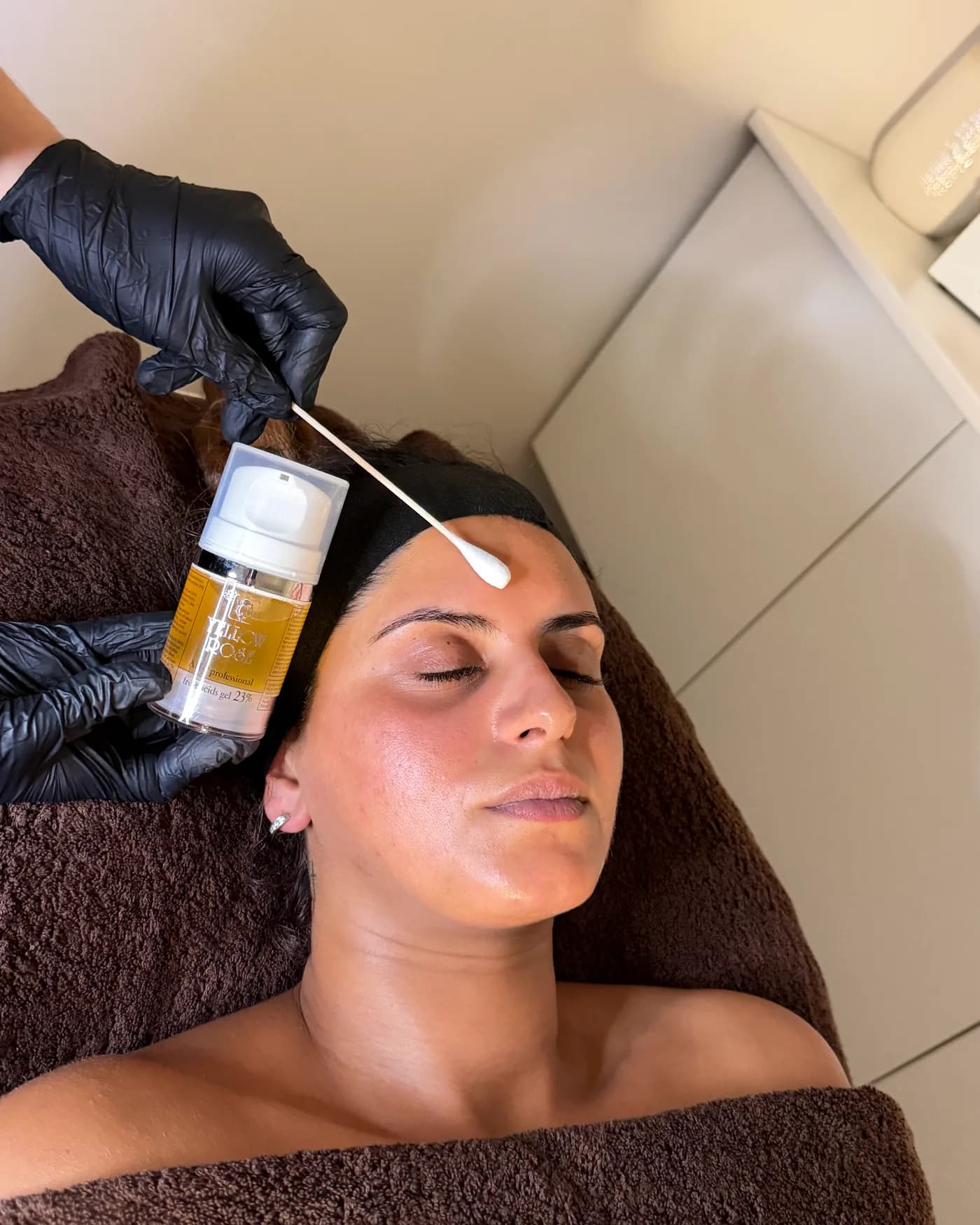
€79.00Glycolic acid, lactic acid and citric acid loosen the dead skin cells that make your complexion flat. In the days afterwards your skin may flake slightly. Usually the First peel at ten per cent comes first.
50 minutes4 to 6 times, every 2 to 4 weeksViewBio peel / herbal peel
€79.00The Ado herbal peel works with ground sponge, algae and herbs, which we massage into your skin. That gets your circulation going properly. In the days afterwards your skin exfoliates by itself. It is an intensive treatment, also often chosen for enlarged pores.
50 minutesnumber agreed togetherViewHydra treatment
€79.00If your skin looks dull because it lacks moisture, it starts here. We apply hyaluronic acid via a serum and a cooling hydrojelly mask, and that attracts water and holds on to it. Skin full of moisture reflects light better again, and it feels plumper and softer.
60 minutes4 to 6 times, every 3 to 4 weeksViewBrightning (microneedling)
€89.00With the Dermapen we bring in five brightening active ingredients, including stable vitamin C. Your complexion becomes brighter and more even, and your skin isn't bleached. We choose this if your skin is also uneven in colour.
50 minutes3 to 6 times, every 4 weeksViewConnective tissue massage
€59.00Half an hour for your circulation. We cleanse, exfoliate lightly and then massage the connective tissue of your face, with cupping as an extra stimulus. Your skin feels warm and gets colour straight away, handy just before an occasion.
30 minutesbooked per sessionView
If you're coming for the first time, you start with the first skin appointment, and you book a peel or microneedling separately afterwards. All prices are on the prices page.
When you see the difference
Glow comes back quickly. How long it stays depends on the series and on your routine at home.
Straight after your appointment
Fresher, with more colour
The loose skin cells are gone and your circulation is going, so your skin looks more awake straight away. After most treatments you can carry on with your day. After microneedling your skin is red for one to two days.
Day 2 to 7
After a peel, the new layer
After a peel your skin may flake slightly for a few days, and after the herbal peel it exfoliates by itself. Leave that alone. Then a smoother layer comes through, and your make-up sits better on it.
After 4 to 6 treatments
A glow that lasts longer
Usually your complexion then looks more even and your skin holds its colour better between two appointments. A photo in daylight from before the first time shows the difference best, because you get used to your own face quickly.
After that
Keeping it up
With a treatment every six to eight weeks and your routine at home you keep the result. If you stop both, the glow slowly fades again.
The best time and just before a party
You can treat dull skin all year round. For a series of peels or microneedling we prefer autumn and winter, because the sun is then less strong. If you've just come back from a sun holiday, we wait about two weeks before starting those.
If you have a wedding or a party, start in good time. A Vitamin C treatment or a connective tissue massage can be done right up to it, especially if your skin already knows them. You plan a peel at least two weeks earlier, and microneedling even further ahead. What to do in which month, you can see in the schedule at your skin before your wedding.
A routine for more glow
What we do in the salon, you keep up at home. A few fixed steps a day are enough.
Morning
- Cleanse gently or rinse with lukewarm water, so your skin feels supple afterwards
- Work in a few drops of vitamin C serum, onto dry skin
- Use a day cream that holds moisture, for example with hyaluronic acid or glycerine
- Finish with sun protection of at least SPF 30, even when it's cloudy
Evening
- Remove make-up and sunscreen first with an oil or balm, and then cleanse again
- Use a mild acid, such as lactic acid, one or two evenings a week, and skip it in the week around a peel
- On the other evenings choose something restorative, such as niacinamide or hyaluronic acid
- Finish with a night cream that suits your skin type
Keep your vitamin C serum closed and out of the light. If it turns orange or brown, it works less well. How to combine vitamin C, acids and retinol is covered in active ingredients explained.
What does it cost to treat dull skin?
A single treatment freshens up your skin, and with a series the glow lasts longer. You pay per session, after your treatment. If you're coming for the first time, you start with the first skin appointment for €69.00.
| Treatment | Per session | Usual course | Full course (estimate) |
|---|---|---|---|
| Vitamin C treatment | €85.00 | 4 to 6 sessions | €340.00 to €510.00 |
| Glow peel 23% | €79.00 | 4 to 6 sessions | €316.00 to €474.00 |
| Brightning (microneedling) | €89.00 | 3 to 6 sessions | €267.00 to €534.00 |
See this as a guide, because it depends on what makes your skin dull and on your routine at home. You book a connective tissue massage per session, for €59.00. Cosmetic treatments are not covered by insurance.
Who it suits and what we look at first
With most dull skin we can start straight away. There are a few things we like to hear beforehand.
A good idea if
- Your skin has looked washed-out for a while, even when you sleep well
- Your skin feels rough and your make-up looks flat
- After the summer or in winter your complexion is greyer than usual
- You want more glow for an occasion and have no time to recover
Check with us first
- You've recently been in the sun or on a sunbed. For peels and microneedling we then wait about two weeks.
- Your skin is flaking or stinging. Then we let it recover first and exfoliate later.
- At home you use acids or retinol. Skip those for a few days before your appointment.
- You take a strong medication from your doctor, such as isotretinoin. Discuss a treatment with that doctor first.
- You're pregnant or breastfeeding. We don't do peels or microneedling then, but we do offer nourishing treatments. See also skincare during your pregnancy.
- You have skin of colour or your skin reacts quickly to irritation. Then we start more gently and build up more slowly.
Good to know about dull skin
A mild acid works more evenly than a scrub
Grains scrub loose cells off unevenly and can cause small irritations. A mild acid loosens the bond between those cells, and that happens more evenly. On dry or irritated skin you leave both alone for a while.
Skin that shines can look dull too
Sebum gives shine on your nose and forehead, and that is something different from a fresh complexion. Underneath, the surface can be rough. With oily skin or enlarged pores we therefore also work on smoothness.
A summer tan only hides dullness for a moment
A tan makes your complexion warmer, while in the meantime your skin builds a thicker top layer. When the colour fades in autumn, that layer is left behind as a greyish haze.
Vitamin C does the most in the morning
As an antioxidant, vitamin C helps your skin during the day against outside influences, under your sun protection. You save retinol and acids for the evening, otherwise you get irritation sooner than glow.
When to see your GP first?
Dull skin usually has to do with your skincare or the season. If your skin becomes much paler, more yellow or greyer in a short time, especially together with tiredness or other symptoms, see your GP first. The same applies if the whites of your eyes turn yellow, or if your skin changed after you started a new medication. You have a change like that assessed first, and a treatment with us is always still possible afterwards. If in doubt, WhatsApp us or ask your question via the skin quiz.
Frequently asked questions about dull skin
Why is my skin so dull?
Usually there is a layer of dead skin cells on top or your skin lacks moisture, and slow circulation often adds to it. A rough, dry top layer reflects light unevenly, and then your complexion looks washed-out. Sun, the season, sleep and stress often play a part as well.
What is the best treatment for dull skin in Enschede?
That depends on the cause. With a washed-out, tired complexion we usually start with the Vitamin C treatment. If your skin feels rough, a peel or the herbal peel works fastest, and if your skin lacks moisture, we choose the Hydra treatment. If your skin is also uneven in colour, microneedling with Brightning is a good fit.
What is the difference between the Vitamin C treatment and the Glow peel?
The Vitamin C treatment is a nourishing treatment of an hour, with exfoliation, brightening serums and masks and a short massage. Your skin doesn't need to recover afterwards. The Glow peel 23% works deeper on the dead skin cells and the texture with fruit acids, and in the days afterwards your skin may flake slightly.
How many treatments do I need?
For a difference that lasts, allow four to six treatments, with two to four weeks in between each time. After that you keep it up with a treatment every six to eight weeks. You simply book a connective tissue massage per session, whenever it suits you.
Does a peel help against dull skin?
Yes, often even the fastest. A peel loosens the dead skin cells, and underneath is a smoother layer that reflects light better. We start mild, usually with the First peel at ten per cent. If your skin is already flaking or stinging, we let it recover first.
Can I still have a treatment just before a party or wedding?
Yes, a Vitamin C treatment or a connective tissue massage can be done right up to it, because your skin doesn't need to recover. You plan a peel at least two weeks earlier, because your skin may flake slightly for the first few days. You do microneedling well in advance, because your skin is red for one to two days and ideally you leave make-up off for two weeks.
Can dull skin come from stress or poor sleep?
That can play a part. After short nights and in busy periods your skin recovers more slowly, and your complexion then looks greyer and flatter. If you've been very tired for a longer time, discuss that with your GP.
What does a treatment for dull skin cost at Moons Beauty?
A connective tissue massage costs €59.00, the Vitamin C treatment €85.00 and the Glow peel 23% €79.00. For the Hydra treatment you pay €79.00 and for the herbal peel €79.00. Microneedling with Brightning costs €89.00. You pay after your treatment in the salon, by card or in cash.
Treatments for dull skin