In brief
- An acne scar lies in the shape of your skin: a pit, a dent or a thickening. A smooth red or brown mark is discolouration, and that usually goes away by itself.
- A scar doesn't disappear completely. With microneedling and intensive peels it can become less visible, and your skin will look more even.
- If your acne is still inflamed, we first calm your skin down. Only then do we start on the scars.
- You start with a skin analysis for €69.00. Deep or thickened scars should be assessed by your GP or dermatologist first.
Written by Nilay, owner and beauty therapist at Moons BeautyUpdated on
What an acne scar actually is
With a deep spot, the inflammation reaches into the dermis, the layer beneath your epidermis where collagen keeps your skin firm. If that inflammation lasts long or is severe, tissue there gets damaged. Your skin repairs that itself, just not always neatly.
If your skin makes too little new collagen during that repair, the spot sinks in and you're left with a pit or dent: a sunken scar. Most acne scars are like that. If your skin makes too much, you get a thickened scar, a firm raised area above the skin.
Whether a spot leaves anything behind depends on how deep it was and how long the inflammation lasted. Your natural tendency plays a part too: with one person a big spot leaves nothing behind, with another it does. Squeezing makes it more likely, because you push the inflammation deeper into the skin. See also blemish-prone skin.
A mark or a scar, how to tell the difference
What many people call a scar is often discolouration. That difference determines what you can expect and where we start.
| Topic | What you see | How it feels | Goes away by itself | Where to start |
|---|---|---|---|---|
| Red or purple mark | A flat, pink to purple mark where a spot was | Smooth, just like the skin around it | Yes, although that takes months | Rest, sun protection and, if needed, niacinamide |
| Brown mark | A flat, brown mark, more often on darker skin | Smooth | Yes, slowly, and even more slowly with sun | The approach under pigmentation |
| Sunken scar | A pit or dent that casts a shadow | Often a slight depression | No, this stays | Microneedling and intensive peels |
| Thickened scar | A firm raised area, sometimes red or shiny | Hard and raised | That differs per scar | First with your GP or dermatologist |
Often you see colour and dents side by side. The colour usually fades, so after a few months there's often less left than you see now.
How to look at your own skin at home
With these tips you can already see better at home what you're dealing with. Do it without make-up.
- Hold your phone's torch at an angle next to your face. A scar casts a little shadow, discolouration stays flat.
- Gently press a small glass on a red mark. If the colour briefly fades, it is usually discolouration.
- Gently pull the skin around a dent taut. If it becomes flatter, it is probably a wide, soft scar, and that type often responds best.
- Take a photo with light from the side. You quickly get used to your reflection, and later that photo is your best comparison.
Four types of scars and what is achievable
The technical terms are given too, because those are the ones you come across most often online.
Wide, soft dents (rolling)
Wavy little valleys with a soft edge, often on your cheeks. This type usually improves most with microneedling, because new collagen can lift the base a little.
Dents with a sharp edge (boxcar)
Round or angular pits with steep edges, as if a small piece of skin has been pressed away. If they are shallow, they can become softer. With deep boxcar scars the difference is usually smaller.
Narrow, deep pits (ice pick)
Small, deep holes, as if pricked with a needle. They go deeper than a salon treatment reaches and are therefore the most stubborn. For these we would rather refer you to a dermatologist.
Thickened scars
A firm raised area, more often on your chest, back or shoulders and sometimes along your jawline. If such a scar grows beyond where the spot was, it is called a keloid. Have it assessed by your GP or dermatologist first.
How we tackle acne scars
Treating scars is a matter of months. The order makes a lot of difference, so we agree on that together beforehand.
Looking at what's there
In the skin analysis we look at which type of scars you have, how deep they are and whether any acne is still active. Then you know what is achievable.
Calm skin first
If there are still inflamed spots, we tackle those first, for example with the Acne treatment and a calm routine. Only once the inflammation is over do we start on the scars.
A course that alternates
Microneedling works on the structure beneath the surface, a peel on the top layer. We often alternate them, with three to four weeks between two microneedling treatments. We never plan a peel and microneedling in the same week.
Protecting what you build up
Apply sun protection every day, even when it's cloudy, and leave new spots alone. That way you hold on to what the course delivers, and the chance of new scars gets smaller.
Treatments for acne scars at Moons in Enschede
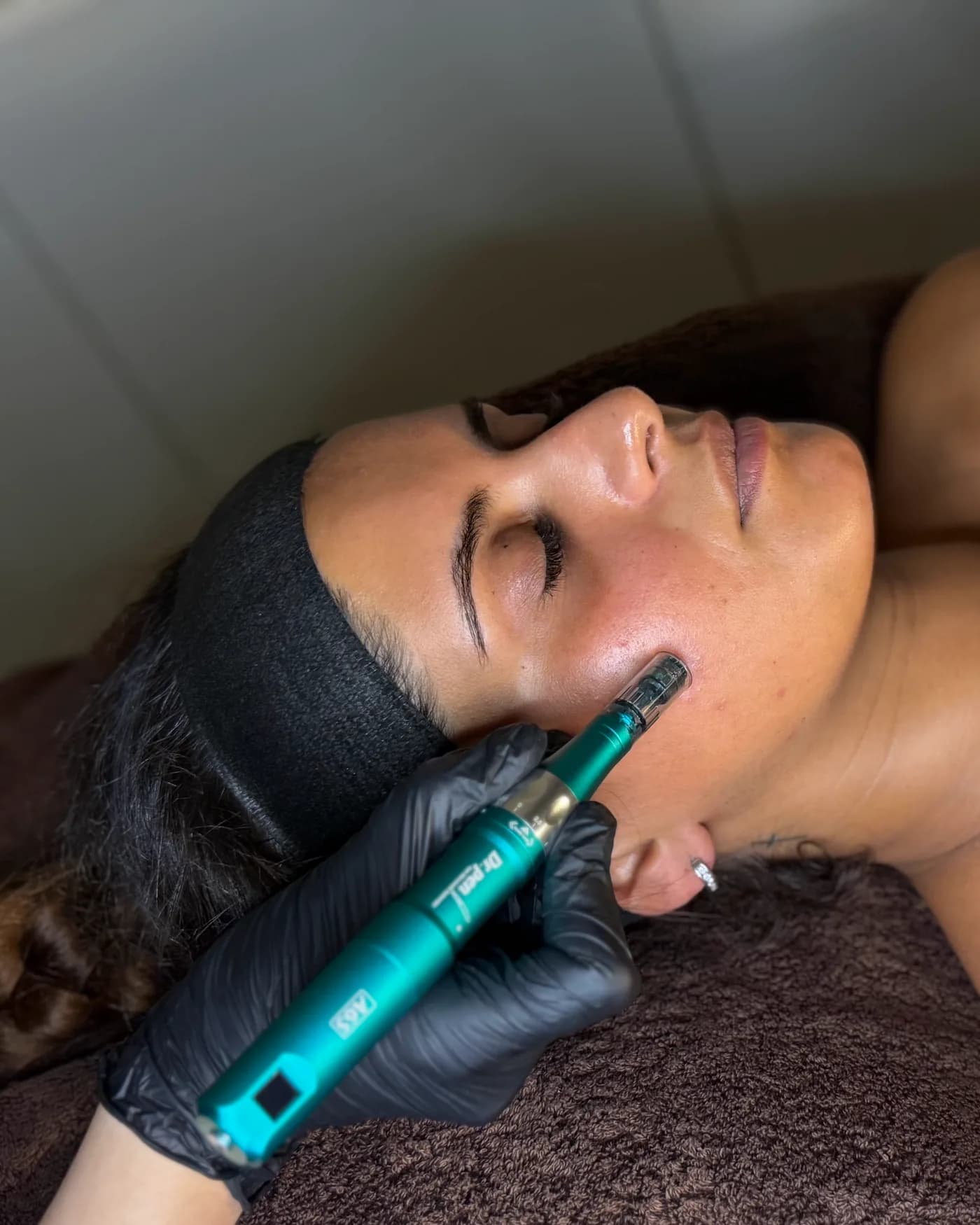
Microneedling stimulates your skin to repair itself beneath the surface, and with sunken scars that is where most of the work lies. An intensive peel renews the top layer, which softens unevenness and the discolouration around it.
PDRN microneedling
€99.00PDRN comes from salmon DNA and prompts your skin to produce collagen and elasticity. With the Dermapen we bring it deep into your skin, together with exosomes and hyaluronic acid. For scars, this is often chosen here.
50 minutesas a course, every 3 to 4 weeksViewCollagen microneedling
€99.00Collagen fragments and peptides stimulate your own production of collagen and elastin. In the weeks afterwards your skin becomes firmer and smoother. Good if your skin also lacks firmness, besides the small scars.
50 minutesas a course, every 3 to 4 weeksViewHerbal peel
€79.00The Ado herbal peel is a mixture of ground sponge, algae and herbs, which we massage into your skin. That stimulates circulation and collagen production, and in the days afterwards your skin renews itself. Often chosen for acne scars.
50 minutesViewGlow peel 30%
€89.00Thirty per cent fruit acids, which work deeper on renewal, scars and an uneven skin tone. We only choose this one once your skin tolerated the Glow peel 23% well. In the first few days you may flake lightly.
50 minutesView
PDRN microneedling can also be done with LED therapy added, for €119.00 in total. With Collagen you can add twenty minutes of LED therapy for €20.00. All prices are in the price list.
The treatments side by side
The difference lies in how deep a treatment works and what you notice in the days afterwards.
| Topic | Price | What it does | Afterwards | Who it's for |
|---|---|---|---|---|
| PDRN microneedling | €99.00 | Repair and new collagen beneath the surface | Red for one to two days | Sunken scars, also when fine lines are present |
| Collagen microneedling | €99.00 | More firmness and smoother skin | Red for one to two days | Small scars on skin that lacks firmness |
| Herbal peel | €79.00 | Circulation and renewal, with sponge, algae and herbs | In the days afterwards your skin exfoliates by itself | Unevenness, enlarged pores and dull skin |
| Glow peel 30% | €89.00 | Renewal of the top layer and a more even skin tone | Light flaking for the first few days | Skin that is already used to peels |
For red and brown marks after spots we choose other treatments, such as microneedling with niacinamide. That approach is explained under pigmentation.
From the first day to after the course
This is how a course of microneedling goes. Your skin makes new collagen in the weeks and months after each treatment, and that takes patience.
Straight after the treatment
Red and warm
Your skin is red and feels warm and a little tight, roughly like after a sunny day. That usually lasts one to two days. Skip exercise, the sauna and the sun during that time, and sleep on a clean pillowcase.
From day 3
The redness is gone
Your skin may still feel a little dry or flake lightly, and you leave those flakes where they are. You can wear make-up from the third day, although it's better to hold off for two weeks.
During the course
Shallower, step by step
Your skin soon looks fresher and smoother. You see little change in the scars themselves from week to week, because the repair underneath is slow. So after the third time, put a new photo next to your starting photo, with the same light from the side.
After the course
Less shadow, more even skin
Small scars look shallower and cast less shadow, and your skin is more even in texture. How much difference it makes depends on the type of scar.
When it's possible and when we wait
The timing is just as important as the treatment. Skin that isn't ready for it yet ends up worse for it.
A good idea if
- Your acne has been calm for a while and you are mainly left with dents or unevenness.
- Your scars are sunken and feel soft.
- Besides small scars you also have red or brown marks.
- You want to do a course of treatments for it and use sun protection every day.
Check with us first
- You still have inflamed spots. Then we first work on calm skin, because with the needles we would spread the inflammation.
- You use isotretinoin, another strong product for your skin, or blood thinners. Then talk to your doctor first.
- You've just been in the sun or on a sunbed. Then we wait about two weeks.
- You have darker skin. Then we build up in smaller steps, because irritation there more easily leaves a dark mark.
- You are pregnant or breastfeeding. Then we hold off on microneedling and peels.
- Your scars are deep, narrow or thickened. Then have them assessed by your GP or dermatologist first.
Your routine at home during a course
At home it's all about protecting and leaving alone. A short routine works better here than a shelf full of active products.
Morning
- Cleanse gently, with lukewarm water or a mild cleanser
- Apply a serum that holds moisture, for example with hyaluronic acid
- Use a cream that supports your skin barrier
- Finish with sun protection SPF 30 to 50, even when it's cloudy
Evening
- Double cleanse if you've worn make-up or sun protection
- Use retinol or acids only after consulting us, and stop using them a few days before a treatment
- Skip scrubs and acids in the days after microneedling or a peel
- Leave spots and flakes alone, however tempting it is
Sun makes the discolouration around a dent darker, and then the dent itself stands out more too. How much to apply and when to reapply is explained under sun protection.
Good to know about acne scars
With dents, microneedling does most of the work
A peel renews the top layer and makes your skin more even, and that certainly helps. The base of a dent lies deeper, and that is where microneedling works. That's why we often combine them.
Autumn is a good time to start
After microneedling and a peel your skin is more sensitive to the sun. In autumn you catch less of it, and if you start in October, you'll be done with your course around spring.
Scars can become more noticeable over the years
Your skin slowly loses collagen and firmness, and then dents sink in a little further. That's how a scar from your teenage years can be more noticeable at forty than at twenty.
Salon, skin therapist or dermatologist?
With scars, these three often work alongside each other.
A beauty therapist works cosmetically on the texture and condition of your skin, with microneedling, peels and skincare. That is our trade. Cosmetic treatments are not covered by insurance.
A skin therapist has paramedical training and more often treats scars and severe acne, sometimes on referral. Supplementary insurance sometimes covers part of that.
A dermatologist is a doctor. For deep, narrow pits or thickened scars they have medical treatments, such as laser. For that you need a referral from your GP. We don't do laser or fillers at Moons.
After or alongside such a treatment, we're glad to look at what we can do for your skin. If you're unsure where you'd be best off, send us a quick WhatsApp on +31 6 12 02 42 00. You can read more about us under about Moons.
When you see your GP first
See your GP or dermatologist first if your scars are thickened or raised, if they itch, hurt or are getting bigger, or if they are deep, narrow pits. The same goes for acne that is still active, with deep, painful spots. The sooner that inflammation is under control, the smaller the chance of new scars. For unsettled skin with blackheads and the occasional spot you can come to us for the Acne treatment. How we approach that is explained under blemish-prone skin. If you use medication for your skin, let us know beforehand. And if your scars preoccupy you so much that it gets you down, discuss that with your GP too.
Frequently asked questions about acne scars
Where can you have acne scars treated in Enschede?
At Moons Beauty, at Haaksbergerstraat 302 in Enschede, with free parking right outside. You start with a first skin appointment of sixty minutes for €69.00, with an analysis and a treatment straight away. You book microneedling or an intensive peel separately afterwards.
Do acne scars ever go away completely?
No, a scar doesn't disappear completely. With microneedling and intensive peels it can become shallower and less noticeable, and your skin looks more even. How much difference that makes depends on the type of scar and how deep it is. After the skin analysis we tell you what is achievable for your skin.
Is a red or brown mark after a spot a scar?
Usually not. A flat, smooth mark is discolouration, because your skin made extra blood vessels or pigment around the inflammation. That goes away by itself, although it takes months and often longer on darker skin. How to make brown marks fade faster is explained under pigmentation.
What helps best against pits in the skin?
For sunken scars we usually choose microneedling. Your skin makes new collagen as a result, which can make dents shallower. An intensive peel works on the surface and makes your skin more even. In a course we often alternate the two.
How many treatments do I need for acne scars?
That depends on the type of scar, how deep it is and how long it has been there. A course of microneedling usually consists of four to six treatments, with three to four weeks in between. After the skin analysis we discuss what makes sense for your skin.
Does microneedling hurt with scars?
For most people it's not too bad. Beforehand we apply a numbing cream, which soaks in for twenty minutes, and after that you mainly feel vibration and a slightly scratchy sensation. Around your nose and on your forehead it's a little more sensitive.
Can I be treated if I still have spots?
We only start on scars once your skin is calm, because with the needles we would spread an inflammation. If you still have blackheads and the occasional spot, we start with the Acne treatment for €75.00. With deep, painful spots you see your GP first.
Can I treat my acne scars at home with a derma roller?
We advise against that. With a roller you can't set the depth, the needles go through your skin at an angle and working sterile is difficult at home. That gives you a bigger chance of irritation and new discolouration than of repair. In the salon we work with a Dermapen with sterile, single-use needles.
What does a treatment for acne scars cost at Moons Beauty?
PDRN microneedling costs €99.00, or €119.00 with LED therapy added. Collagen microneedling costs €99.00, the herbal peel €79.00 and the Glow peel 30% €89.00. You start with the skin analysis for €69.00. You pay per session, after the treatment in the salon, by card or in cash.
Treatments for acne scars