In brief
- Skin can be naturally sensitive, or become sensitive through too much scrubbing, acids and active products. The latter can largely be reversed.
- We deliberately do less. First we bring calm and moisture with a calming treatment, and only then do we add something active.
- You start with a skin analysis for €69.00. In it we find out together what your skin reacts to.
- Persistent redness with bumps or visible small veins belongs with your GP. In that case we look after your skin alongside your doctor's treatment, never instead of it.
Written by Nilay, owner and beauty therapist at Moons BeautyUpdated on
What sensitive skin actually is
Dry and oily are skin types. Sensitive is a way of reacting. Your skin lets in more than it is meant to and lets you know straight away. Warmth, a new serum, a flannel or a glass of wine, and your cheeks colour up. Usually it fades within an hour.
What makes it difficult is that you can't predict it. The same cream can feel fine in May and sting in November. Then you no longer dare to try anything new, or you do just the opposite and keep trying, so your skin never settles down.
- Redness that appears with heat, cold, exertion or stress
- Stinging or burning with products that other people tolerate perfectly well
- A tight, itchy feeling right after cleansing
- Patchy redness on your cheeks, nose and sometimes your neck
- Skin that reacts differently from day to day
Sensitive by nature or become sensitive?
Some people naturally have thin, fine skin that flushes easily. You can often see it already in childhood photos, in red cheeks in the cold or a face that flares up straight away when you exercise. That stays with you, and it is very manageable.
In the salon we see skin that has become sensitive much more often. It started with a good intention: fewer spots, fewer fine lines or more glow. A mild acid was added, then retinol, a scrub to be on the safe side and a cleansing brush. A few months later every cream stings.
That difference determines what you can expect, because skin that has become sensitive can largely be reversed. A barrier that has been broken down rebuilds itself as soon as you stop breaking it down. Allow six to twelve weeks. The first two weeks are the hardest, because your skin doesn't look any better yet and the temptation to try something new is strong.
The difference at a glance
Compare your own skin with this. Skin that fits the right-hand column improves the fastest.
| Topic | Naturally sensitive | Become sensitive |
|---|---|---|
| Since when | As long as you can remember | Since a certain period or a new product |
| What you see | Blushes easily, fine skin, visible blood flow | Patchy redness, flaking, stinging with everything |
| What came before | Nothing in particular, it comes with your skin | Acids, retinol, scrubs or a brush, often together |
| New products | A reaction, but a predictable one | A reaction to almost everything, even old familiar products |
| Time to settle | Manageable, stays something to watch | Six to twelve weeks, and then largely over |
| What helps | Avoid triggers, keep the barrier strong | Leave things out, build up and only then add |
It can also be both: skin that naturally reacts quickly and has then been given too much on top of that.
What sensitive skin reacts to
Most people react to two or three things. You find them by leaving them out for a while.
Changes in temperature
From the cold into a warm office, the sauna or a hairdryer too close to your face. Your blood vessels widen and you see it straight away. A big, fast difference in temperature in particular sets it off.
Hot showers and hard water
Hot water strips away oils and leaves your skin tight. If your water is hard, a thin film is also left behind that can irritate. Rinse with lukewarm water and pat your skin dry instead of rubbing. That makes more difference than you think.
Fragrance and alcohol in products
Fragrance is in almost everything, even in products that call themselves natural. Essential oils are fragrances just the same. Alcohol denat. high on the list dries your skin out, so with sensitive skin, read the first five ingredients.
Too many active products
Acids, retinol, vitamin C and a scrub in one routine. On their own they all seem harmless. Together they break down faster than your skin can build up. This is the cause we see most often, and fortunately it is also the easiest to put right.
Sun, wind and cycling
UV radiation makes sensitive skin more reactive and wind while cycling does the rest. Mineral sun protection with zinc or titanium is usually tolerated better than a chemical filter.
Stress, sleep and food
A busy period, sleeping badly, alcohol or spicy food increase the blood flow in your face. You can't always avoid that. It does help to know about it, so you don't immediately blame your cream.
The reset: back to three products
If your skin reacts to everything, finding out what it reacts to is a hopeless task as long as you use ten products. That's why we often start by leaving things out. For two weeks you go back to three things: a mild cleanser, a simple cream and sun protection. You use nothing else.
That feels counterintuitive, especially if you're used to adding something when there's a problem. Yet skin that no longer has anything to deal with shows within two weeks how it is doing on its own. Usually the redness subsides and the stinging stops.
After that you reintroduce one product every two weeks. If your skin reacts, you know straight away what it was. All it costs you is patience. If you'd like to do it together, we'll set out the plan during the skin analysis and agree when you come back.
Treatments for sensitive skin at Moons
Our approach is deliberately boring. First calm, then moisture, and something active only when your skin can handle it. We would rather do too little four times than too much once.
Redness and sensitive skin
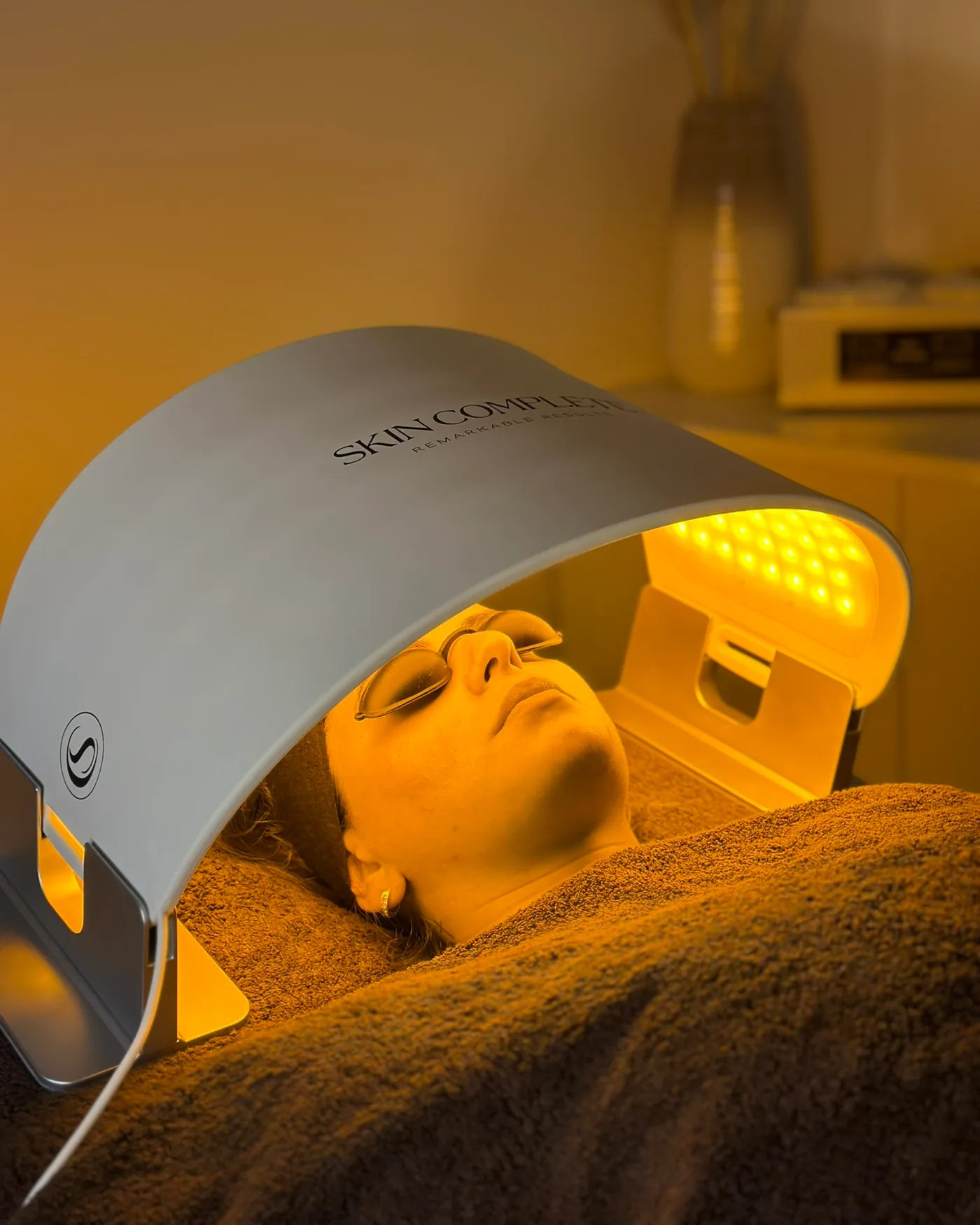
€75.00A mild cleanse, a calming serum, a gel mask and LED therapy. We leave out steam, a firm massage and acids in this treatment. We start with this for almost every sensitive skin.
60 minutes3 to 5 times, every 4 weeksViewHydra treatment
€79.00A barrier that lets too much through also loses too much moisture. Hyaluronic acid and a cooling hydrojelly mask replenish that, so your skin feels less tight and flares up less easily. Have a look at dry skin too.
60 minutesevery 4 weeksViewMandelic acid 30%
€89.00This only comes into play once your skin has been stable for weeks. Mandelic acid has larger molecules than glycolic acid and penetrates more slowly and evenly. If one more step is allowed, this is our gentlest choice.
50 minutesagreed together, not when irritatedViewFirst skin appointment
€69.00In sixty minutes we find out what your skin reacts to. We go through your routine together, we look at your skin and you get a mild treatment. Bring your products, or photos of the labels.
60 minutesonce, as a startView
With sensitive skin we don't do strong peels, steam or microneedling on irritated skin. How an appointment goes is explained under practical information. You can find the prices on the prices page.
Sensitive skin or a skin condition?
Sensitive skin is something different from a skin condition. That distinction determines where you can go, and we are strict about it.
A good idea if
- Your skin reacts, but no patches or bumps remain
- The redness comes up and fades again within an hour
- It started after a period of acids, retinol or a scrub
- Your skin stings and feels tight, but is not broken and not weeping
- You are being treated by a doctor and are looking for mild skincare alongside that
Check with us first
- Persistent redness on your cheeks and nose with visible small veins or bumps, which may point to rosacea
- Itchy, flaking or weeping patches that keep coming back
- Small red bumps around your mouth or nose, especially after using a hormone cream
- Redness that stays for months or slowly gets worse
- Sudden swelling, blisters or a reaction that makes you short of breath
Sensitivity on medium or darker skin
On medium or darker skin, redness is hard to see. Irritation is more likely to show as a darker, purple-brown or greyish tinge. Sometimes you only feel it: your skin is warm, tight or burning. As a result, sensitive skin is recognised later and often treated for too long with something that doesn't suit it.
On top of that, any irritation can leave a dark spot that stays for months. You can read how that works under pigmentation. If in doubt, we therefore go more on what you feel than on what we see, and we build up in even smaller steps.
What can you expect and when?
With sensitive skin the first goal is for it to react less. Looking better comes afterwards. This is the course we see most often.
The first few days
The stinging stops
As soon as you stop whatever is breaking your skin down, the burning feeling after cleansing usually goes first. The redness is still there then, because it lags behind the feeling.
After 2 to 4 weeks
Calmer and more predictable
Your skin flares up less often and settles faster after a shower or a cold bike ride. Your cream feels normal again, and that's exactly what we want to see in this phase.
After 6 to 12 weeks
The barrier is rebuilt
Around this point most people say their skin is behaving normally again. Now we can carefully add something, such as a mild peel, one step at a time.
After that
Keeping it calm
You come every six to eight weeks for maintenance, and you have a routine you can keep up even in a busy week. Skin that is naturally sensitive stays sensitive, just with far fewer surprises. Have a look at the results too.
When is the best time to start?
You can start all year round. There are two tricky moments, though. The first is the first cold weeks, when your skin goes back and forth between outdoors and the heating. The second is the first warm weeks in spring, when the sun is suddenly back on your face.
That's why we see most sensitive skin in October and in March. If you want to build up calmly, start a few weeks before a change like that. Never plan something new right before a wedding or holiday either. With skin that reacts quickly you want two weeks of leeway.
At home the rule is: less is more
As few steps as possible, and new things one at a time. That is exactly what sensitive skin needs.
Morning
- Rinse with lukewarm water, or use a mild cleanser without fragrance
- Pat dry with a clean towel instead of rubbing
- Apply a simple cream to skin that is still damp
- Finish with mineral sun protection that contains zinc or titanium
Evening
- Cleanse gently, and double cleanse only if you wear make-up or sun protection
- Skip scrubs, brushes, saunas and hot water
- Use a calming cream, for example with panthenol, ceramides or niacinamide
- Introduce new products one at a time and give each one two weeks
- Use acids and retinol only after consulting us, and never in a week when your skin is stinging
If you're unsure whether a product is the culprit, test it on your jawline only, for two weeks. If it goes wrong, only that patch reacts and the rest of your week stays calm.
What does it cost to treat sensitive skin?
You pay per treatment, so you can decide to stop after just one. The last column shows roughly what a gentle course costs. On top of that comes the first skin appointment for €69.00.
| Treatment | Per session | Usual course | Full course (estimate) |
|---|---|---|---|
| Redness and sensitive skin | €75.00 | 3 to 5 sessions | €225.00 to €375.00 |
| Hydra treatment | €79.00 | 3 to 4 sessions | €237.00 to €316.00 |
| Mandelic acid 30% | €89.00 | 2 to 4 sessions | €178.00 to €356.00 |
These amounts are a guide. With sensitive skin we look each time at whether a next step is sensible. Cosmetic treatments are not covered by insurance. The current prices are on the prices page.
Good to know about sensitive skin
Sensitive is usually something different from allergic
With an allergy, your immune system reacts strongly, again and again, to one particular substance. Sensitive skin reacts a little to all sorts of things and varies from day to day, because the protective layer lets too much through. If you suspect a real allergy, have your GP look into it.
Natural ingredients can be very irritating
Essential oils, citrus and herbal extracts are natural, and they are among the most irritating ingredients there are. A boring, fragrance-free cream often does better on sensitive skin than a luxury botanical formula.
Stinging is a signal from your skin
If a product stings, your skin is letting you know it can't cope with something. A brief tingle with vitamin C can be normal. If it burns or keeps stinging, rinse it off and stop using it.
A damaged barrier needs rest first
Your skin does get used to some active ingredients, as long as the barrier is intact. If you carry on while it is broken, a normal skin actually becomes a sensitive one. If in doubt, we stop and build up again.
When to see your GP first?
If the redness stays or you can see small blood vessels, have your GP assess it. That also applies if bumps or spots appear on your cheeks and nose, or if you have burning eyes as well. It could then be rosacea. Also see your GP first for itchy, flaking or weeping patches that keep coming back, and for small red bumps around your mouth or nose. If a doctor is treating you, we can do mild, nourishing treatments alongside that. Just let us know and we'll coordinate. A skin therapist works paramedically and often on referral, a dermatologist is a doctor. If you're not sure where your skin belongs, ask your question via the skin quiz or read more about Moons.
Frequently asked questions about sensitive skin
Can I have a facial with sensitive skin?
Yes, if we work mildly and build up calmly. We skip steam, scrubs and peels until your skin is stronger, and we start with a calming treatment. Tell us beforehand what your skin has reacted to in the past and which products you use now. That saves a lot of guesswork.
Which treatment helps best against redness in the face?
At Moons that is the calming treatment for redness and dry skin. We cleanse gently and use a calming serum, a gel mask and LED therapy, which helps to reduce redness. If your skin also feels tight, we combine it with hydration. We save stronger treatments for later, because with redness pushing on rarely pays off.
Will my skin go red after the treatment?
Slight redness straight afterwards is normal, and it usually fades within an hour. With sensitive skin we deliberately choose treatments where that happens as little as possible. To be on the safe side, don't book a first treatment on the day of a party or another important occasion.
Why does my skin suddenly react to a product I've used for years?
Usually your skin barrier has been weakened by something else, such as a cold spell, stress or a new product alongside it. The familiar product is then the straw that breaks the camel's back. That's why we first look at your whole routine, even if the newest addition looks like the culprit.
How long does it take for my skin barrier to recover?
As soon as you stop whatever is breaking your skin down, the burning feeling often disappears within a few days. After two to four weeks your skin becomes calmer and more predictable. For a barrier that can take a knock again, allow six to twelve weeks in which nothing new is added.
Which ingredients are best avoided with sensitive skin?
Pay particular attention to fragrance, alcohol denat. high on the list, essential oils and strong extracts such as menthol, mint and citrus. Lots of active products mixed together are a risk as well. If in doubt, choose a product with a short ingredients list. The shorter that list, the smaller the chance of trouble.
Can I have a peel or microneedling with sensitive skin?
As long as your skin stings, flakes or stays red, we don't do that. Once it has been stable for a number of weeks, a mild peel with mandelic acid is possible. That is the gentlest acid choice, with a short contact time. We don't do microneedling on irritated skin, because you would then trigger exactly what you want to calm.
Can I come to you if I have rosacea?
If your GP or dermatologist is treating you for rosacea, we can do mild, nourishing treatments alongside that in consultation, without steam or acids. If you suspect rosacea and nobody has looked at it yet, have it assessed first.
Does LED therapy help against redness?
We use LED therapy to help reduce redness and to support recovery after the treatment. You don't treat a condition with it. With sensitive skin it is a pleasant way to calm things down, because nothing needs to go on your skin. It is part of the calming treatment.
What does a treatment for sensitive skin cost at Moons Beauty?
The calming treatment for redness and dry skin costs €75.00 and the Hydra treatment €79.00. A peel with mandelic acid costs €89.00, and we only do that once your skin is stable. The first skin appointment with analysis costs €69.00. You pay per session. All prices are on the prices page.
Treatments for sensitive skin