In brief
- The Redness treatment is for skin that feels red, sensitive or dry. It takes an hour and costs €75.00.
- We cleanse and exfoliate mildly, apply a calming serum and gel mask and massage gently. LED therapy helps to reduce the redness.
- Afterwards your skin feels calmer and less tight. For skin that stays calm, you usually come three to five times, every four weeks.
- If the redness stays, gets worse or you see bumps with pus, see your GP first.
Written by Nilay, owner and beauty therapist at Moons BeautyUpdated on
A treatment that irritates your skin as little as possible.
Skin that reddens quickly already reacts to small things, such as going from the cold street into a warm room. In this treatment we therefore give your skin as few triggers as possible. Everything is mild, and we skip steam, because heat actually brings redness on.
In our booking calendar it's called Redness treatment / dry skin, because it's also meant for skin that feels tight and taut. Red and dry often go together. A skin barrier with gaps lets moisture out and triggers in, and then your skin reacts to all sorts of things. There's more about this under sensitive skin and dry skin.
An hour, at a calm pace.
You lie under a blanket, and whether you want to chat or would rather lie quietly is up to you.
Looking and asking
We look at how your skin is doing today and ask what it reacts to. If you're using something new or something stings, tell us.
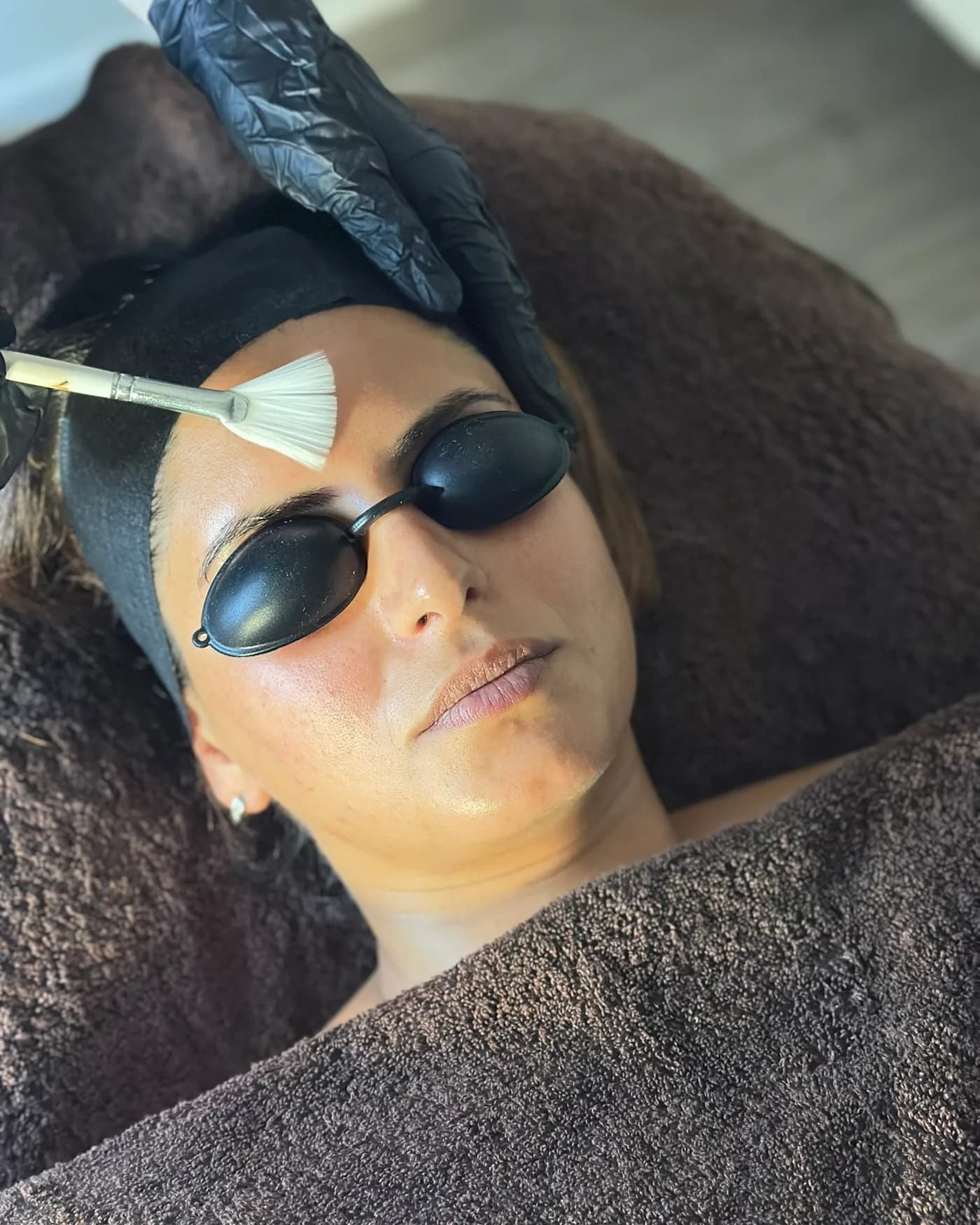
Mild cleansing and exfoliating
We cleanse your skin gently and exfoliate lightly. Exfoliating means we remove loose, dead skin cells, so the care afterwards absorbs better.
Serum, gel mask and massage
A calming serum and a gel mask settle your skin. We do the massage gently and with little pressure.
LED therapy
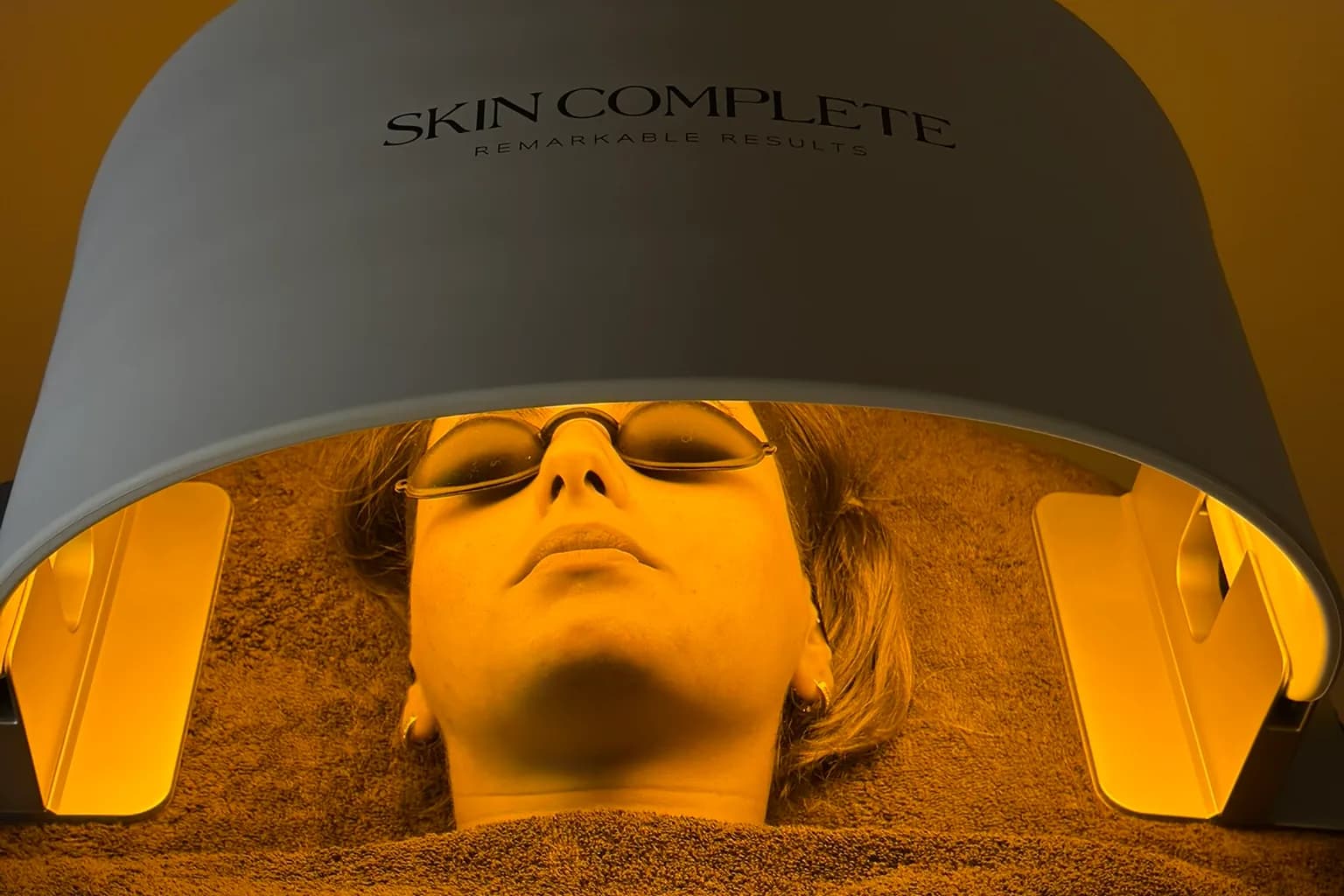
You lie under the LED light for a while, with your eyes covered. The light helps to reduce the redness and supports your skin's recovery.
Why LED therapy is part of this treatment.
With LED therapy your face lies under a light panel. There's no UV in it, so you can't tan or burn. At most you feel a gentle warmth.
For skin that reacts quickly, every product that goes on it counts. The light calms without anything extra needing to go on your skin. With this treatment LED is always included, and with a peel you can add it on. How else we use it is explained under LED therapy.
LED is a calming step here. You don't treat rosacea or eczema with it, for that you see your GP. If you take medication that makes you sensitive to light, or you have epilepsy, we skip the LED.
Redness, Hydra or connective tissue massage?
These treatments are often weighed against each other. Choose based on what your skin needs most right now.
| Topic | Duration | Price | What it does | Who it's for |
|---|---|---|---|---|
| Redness treatment | 60 minutes | €75.00 | Calming with serum, gel mask, a gentle massage and LED | Skin that quickly turns red, stings or feels tight |
| Hydra treatment | 60 minutes | €79.00 | Replenishing moisture with hyaluronic acid and a cooling hydrojelly mask | Skin that mainly feels tight and rarely turns red |
| Connective tissue massage with LED | 50 minutes | €79.00 | Massage with cupping for circulation, then LED to calm | Anyone who mainly feels tension in the face |
| Mandelic acid 30% | 50 minutes | €89.00 | A mild peel with mandelic acid, which works more gently than glycolic acid | Skin that has been calm for weeks |
We only do acids once your skin has been stable for a number of weeks. If in doubt, we choose together during the first skin appointment.
What you notice, after one visit and after a series.
One treatment settles your skin. A series, together with a simple routine at home, makes sure it flares up less often.
Straight after
Calmer and less tight
Your skin feels calmer and less tight. Slight redness straight after usually subsides within an hour. For the next few days, don't start anything new.
After 2 to 4 weeks
Flaring up less often
If you keep up what we agreed at home, your skin usually flares up less often in these weeks. Around week four we plan the next treatment.
After 6 to 12 weeks
Room for something extra
By then your skin barrier is usually strong enough for a careful extra step, such as a mild peel with mandelic acid. We only do that if your skin has been calm for weeks.
After that
Maintenance
A treatment every six to eight weeks keeps your skin calm. If your skin is naturally sensitive, it stays that way, although you then know better what it reacts to.
Which skin this treatment suits.
The treatment is mild enough for most skins that react quickly. There are a few things we'd like to know beforehand.
A good idea if
- Your skin quickly turns red with heat, cold or a new product.
- A cream someone else doesn't notice at all stings or burns on your skin.
- Your skin feels tight and taut, especially once the heating goes back on.
- Your skin has become overstimulated by acids, retinol or scrubs and now mainly needs rest.
Check with us first
- Persistent redness with bumps or visible small veins. Have your GP look at that first.
- Medication that makes you sensitive to light, or epilepsy. Tell us beforehand, and we'll skip the LED.
- Acids or retinol in your routine. Leave them out in the days before your appointment.
- Skin that is open, weeping or broken. Let us know beforehand, and we'll first check whether treating it is sensible.
Good to know for home.
What you do at home determines how long your skin stays calm. The full routine is under sensitive skin.
Fewer products give your skin a rest
If your skin reacts to lots of things, go back for two weeks to a mild cleanser, a simple cream and sun protection. That way you soon notice how your skin does by itself.
Lukewarm water is kinder to your skin
The hotter the water, the more protective oil you rinse away and the tighter your skin feels afterwards. Wash your face with lukewarm water and pat it dry with a clean towel.
You test a new product for two weeks
Introduce new products one at a time. For the first two weeks, apply something new only along your jawline. If it goes wrong, you have little trouble from it.
In winter your skin has a harder time
Cold outside and the heating inside draw moisture out of your skin, and every change in temperature makes your cheeks flush. What you then adjust is under your skin in winter.
See your GP first with these signs.
See your GP first if the redness no longer fades or actually gets worse. The same applies to bumps with pus, visible small veins on your cheeks and nose, and patches that itch or weep and keep coming back. Rosacea or eczema may be behind that. If your face suddenly swells, you get blisters or you have trouble breathing, contact a doctor straight away. If you're already being treated, we adjust our care to that in consultation.
Redness treatment and what you pay.
- SkincareRedness treatment / dry skin60 minutes€75.00
Calmer skin that feels less tight.
60 minutes
Prices include VAT. You book online with Moons Beauty.
Book an appointmentFrequently asked questions about redness treatment
How much does a treatment for facial redness cost?
At Moons Beauty the Redness treatment costs €75.00, for an hour. The LED therapy is included. You pay afterwards in the salon, by card or in cash.
Does this treatment help with rosacea?
No, rosacea is a skin condition and that belongs with your GP or dermatologist. If you're being treated for it, this calming appointment can sit alongside that in consultation. We then work extra mildly and leave out steam and acids.
Will my skin get redder from the treatment?
A slight flush straight after the treatment is possible, and it's usually gone within an hour. Because we work gently and skip steam, we keep that as small as possible. If you have a party, don't plan your first visit on the same day.
How often should I come for calmer skin?
Usually three to five times, every four weeks. After that, a treatment every six to eight weeks keeps your skin calm. After each visit we look together at whether your skin is ready for the next step.
Is the treatment also suitable for dry skin?
Yes, it's meant for skin that feels red or dry, or both. If your skin mainly feels tight and rarely turns red, the Hydra treatment is often a better fit.
What can I do at home about red skin?
Keep it simple: lukewarm water, a mild cleanser without perfume, a simple cream and a mineral sun protection with zinc or titanium. Introduce new products one at a time and give each one two weeks.
Why people book this
Do you recognise this in your skin?
You might also be interested in
Sensitive skin
What your skin reacts to, and why going back to three products helps.
Dry skin
Whether your skin lacks oil or moisture determines which approach works best.
Your skin in winter
Cold outside and dry air inside, and what you then adjust in your routine.
Facial
We tailor everything to what your skin needs that day.
Facial cleanse
Blackheads and blockages out, in 45 or 60 minutes.
Hydra treatment
Hyaluronic acid and a cool mask for skin that feels tight.