In brief
- With acne there are two routes. A salon cleanses and cares for the skin: blockages come out and the skin settles. A doctor treats it medically, with medication.
- For blackheads, clogged pores and the odd spot, you can go to a salon. With inflamed spots that hurt, you see your GP first.
- In the Netherlands, a treatment in a salon is not covered by insurance. With a skin therapist it sometimes is, through supplementary insurance.
- Expect it to take weeks. For a visible difference you usually come four to six times, every four weeks.
- At Moons in Enschede the Acne treatment costs €75.00.
Written by Nilay, owner and beauty therapist at Moons BeautyUpdated on
What is an acne treatment?
The term is used for two different things. In a salon, an acne treatment is a cleansing facial for unsettled skin. Clogged pores are emptied, and then the skin is calmed. With a doctor, it is a medical treatment, usually with a prescription cream or tablets.
Which of the two you need depends on what you see. Sebum and dead skin cells together block a pore. If that pore stays open, the contents darken and you have a blackhead. If bacteria get involved, it turns red and tender. The deeper and more painful the inflammation, the more it is a matter for a doctor.
The two routes go well together. Many people leave the medical side to their doctor and come to the salon for the cleansing.
Beauty therapist, GP or dermatologist?
Before you book anywhere, it helps to know who does what in the Netherlands.
| Topic | What they do | When to go |
|---|---|---|
| Beauty therapist | Works cosmetically: cleansing, removing blockages, peels and advice on your skincare | For blackheads, clogged pores and the odd spot. You don't need a referral |
| Skin therapist | Has paramedical training and more often treats severe acne and scars | Often on referral from your GP |
| GP | Assesses your skin and can prescribe medication | For inflamed spots that hurt, lumps under your skin or spots that leave pitted scars |
| Dermatologist | Is a doctor: determines what you have and treats it medically | With a referral from your GP |
If you're being treated by your doctor, always tell the salon. Then they can take it into account.
Is acne treatment covered by insurance?
In the Netherlands, an acne treatment in a salon counts as cosmetic and isn't covered by insurance.
It's different with a skin therapist (a healthcare profession in the Netherlands). Part of those treatments is sometimes covered by supplementary insurance. How much varies by insurer and by policy. Check your policy or call your insurer before you start.
If your acne is severe, your GP is the first step. They look at what is needed and refer you on if necessary.
What does a beauty therapist do for acne?
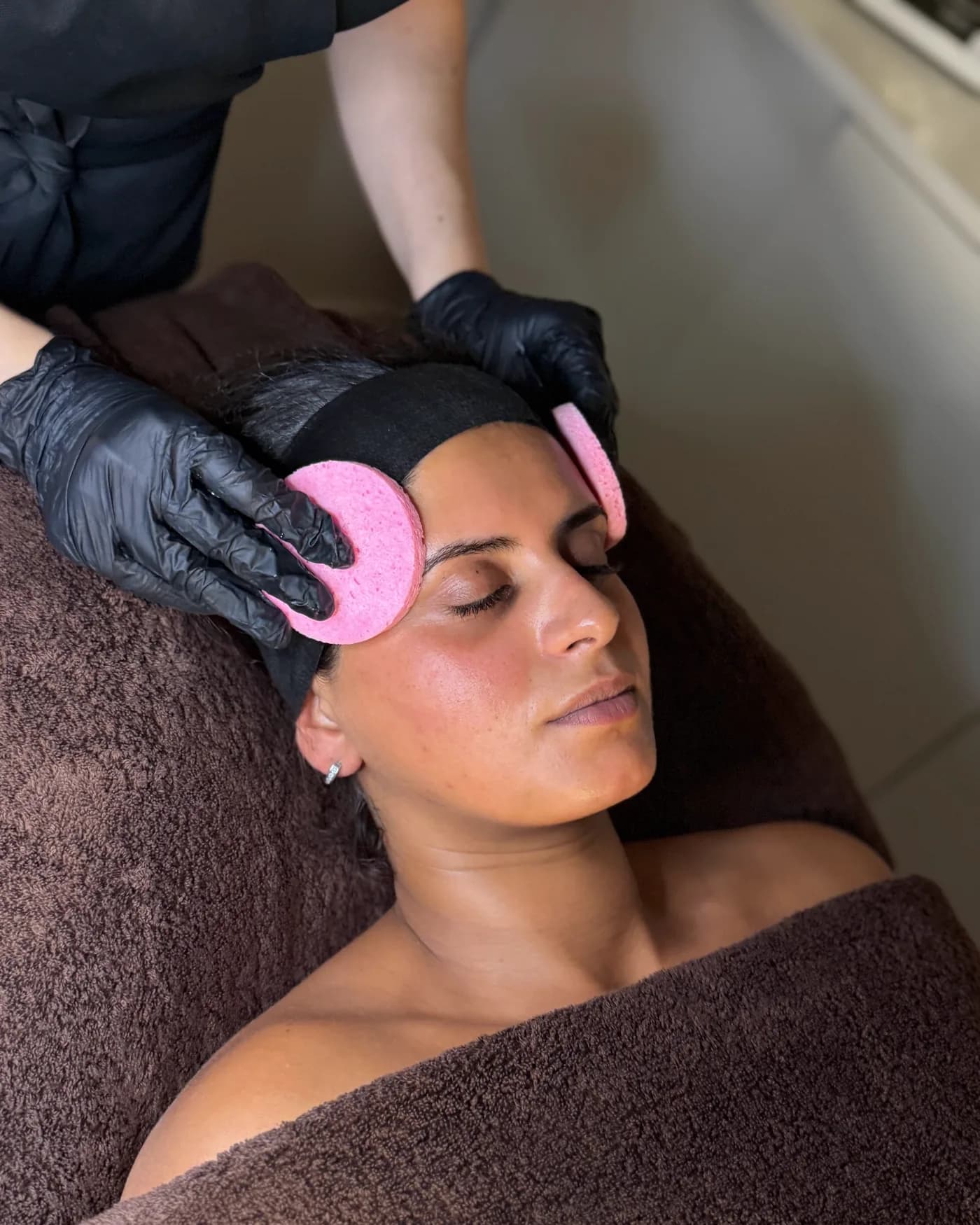
This is how the Acne treatment goes at Moons, in fifty minutes.
Looking
First we look at where the blockages are and which spots are inflamed. We work around inflamed areas.
Loosening
A mild peel loosens the dead skin cells that seal a pore. Steam softens the sebum.
Emptying
Blackheads and blockages come out pore by pore. After the peel and the steam, little pressure is needed.
Calming
LED light, a mask and a cream calm your skin. At most, the light feels gently warm.
Leave blackheads alone or have them removed?
A blackhead is really stuck in the pore. In the salon it comes out once a peel and steam have softened the contents. That way it gives way with little pressure, and your skin stays intact.
The grey dots on your nose are usually something else. Those are sebaceous filaments: sebum that fills the pore and sticks out of it a little. They are part of normal skin and come back by themselves after emptying. How to tell them apart and what helps at home is explained in removing blackheads.
Squeezing them yourself pushes part of the contents deeper into your skin. The inflammation grows there, and a dark mark or a pitted scar is more likely to remain.
How soon do you see results?
After one treatment your pores are empty and your skin is thoroughly clean. Where extractions were done, your skin can be red for a few hours.
The difference that lasts comes later. Your skin renews itself in about four weeks, and that rhythm sets the pace. After two or three treatments, six to eight weeks on, your pores fill up more slowly.
For a visible difference you usually come four to six times, every four weeks. After that, a treatment every six to eight weeks is enough for most people. A photo from your first appointment helps, because such a gradual difference is easy to miss in the mirror.
Does it get worse first?
It can. What was already under your skin can still come out in the first weeks, in the places where you always get spots. That's called purging, and it clears up by itself.
If spots appear in places where you never had any, let the salon know.
Which treatment for which stage?
| Topic | What suits | Good to know |
|---|---|---|
| Lots of blackheads, little inflammation | A facial cleanse | As maintenance every four to six weeks |
| Blackheads and the odd spot | The Acne treatment | Four to six times, every four weeks |
| Pores that keep filling up | A peel on top, once your skin is calmer | Fruit acids loosen the dead cells that seal a pore |
| Red or brown marks after spots | Patience and sun protection every day | It's discolouration, and it fades by itself over the months that follow |
| Pitted scars that remain | Stronger peels or microneedling | Only once the inflammation has passed |
| Deep, painful inflammation | Your GP | A treatment in the salon comes after that |
Teenagers, adults and anyone on medication.
Teenagers
If you're coming with a teenager, send us a WhatsApp beforehand. Then we discuss whether treatment makes sense right now. We keep it simple: a good cleanse and a short routine for home.
Around thirty
Adult skin is often blemish-prone and dry at the same time. Strong products from your teenage years dry that skin out. That's why hydration is part of it.
Hormonal phases
Around your cycle, after stopping the pill, in a pregnancy or during the menopause, your skin can suddenly change. We then prefer to plan treatments in the calmer weeks.
Men
Men's skin makes more sebum on average, so the cleanse can be more thorough. Because of shaving, ingrown hairs and spots get mixed up.
Pregnant or breastfeeding
Then we opt for a mild cleanse. We postpone acid peels and microneedling.
Medication for your skin
Always mention it beforehand. With isotretinoin, a course of antibiotics or a prescription cream your skin is more vulnerable. Check with your doctor first.
What does an acne treatment cost?
You pay per session. Because you usually do a series, those amounts are shown too.
| Treatment | Per session | Usual course | Full course (estimate) |
|---|---|---|---|
| Acne treatment | €75.00 | 4 to 6 sessions | €300.00 to €450.00 |
| Full cleansing | €75.00 | 3 to 4 sessions | €225.00 to €300.00 |
| First peel 10% | €69.00 | 4 sessions | €276.00 to €276.00 |
These are the prices at Moons in Enschede. The LED therapy and the mask are already included in the price of the Acne treatment. All prices are on the prices page.
What to look for when choosing a salon?
These are the signs of a place that handles unsettled skin with care.
Inflamed areas are left alone
They should be worked around. That way your skin stays intact.
They ask about medication
And about acids and retinol you use at home. Those change what is possible.
Blockages are loosened first
After a peel and steam, a blockage gives way with little pressure.
You're told when a doctor is a better fit
With deep, painful inflammation, a salon should refer you on.
You get a routine to take home
Between two appointments, your skincare at home does the work.
You can see real work
Photos of their own clients and what others write. Ours are on the results page and under reviews.
See your GP first with inflamed acne.
If your spots are inflamed and painful, you feel lumps under your skin or pitted scars remain, see your GP or dermatologist first. The same applies if you use medication for your skin. If your skin weighs heavily on your mood, your GP is also a good first step.
Frequently asked questions about acne treatment
What is an acne treatment?
In a salon, it's a cleansing facial for unsettled skin: clogged pores are emptied and the skin is calmed. With a doctor, it's a medical treatment, usually with medication.
Can a beauty therapist treat acne?
With blackheads, clogged pores and the odd spot, yes. A beauty therapist cleanses, removes blockages and gives advice on your skincare. With inflamed spots that hurt, a doctor looks first.
When should you see your GP about acne?
If your spots are inflamed and hurt, if you feel lumps under your skin or if pitted scars remain. If your skin weighs heavily on your mood, your GP is a good first step too.
When do you see a dermatologist?
In the Netherlands, with a referral from your GP. A dermatologist is a doctor, determines what you have and treats it medically.
Beauty therapist or skin therapist for acne?
A beauty therapist works cosmetically on unsettled skin. A skin therapist (a healthcare profession in the Netherlands) has paramedical training and more often treats severe acne and scars, often on referral.
Is an acne treatment covered by insurance?
In the Netherlands, not in a salon. With a skin therapist, part of it is sometimes covered by supplementary insurance. That varies by insurer and by policy.
How often do you have an acne treatment?
Usually four to six times, every four weeks. After that, a treatment every six to eight weeks is enough for most people.
How soon do you see results from an acne treatment?
Straight afterwards your skin is clean. After two or three treatments, six to eight weeks on, your pores fill up more slowly.
Does acne get worse at first after a treatment?
It can. What was already under your skin can come out in the first weeks, in your usual places. That clears up by itself.
Does removing blackheads hurt?
It can be tender, especially where a lot is stuck. Thanks to the peel and the steam, blockages give way more easily. Say so if it gets too much.
Should you squeeze spots yourself?
Better not. Part of the contents then ends up deeper in your skin. The inflammation grows, and a mark or a pitted scar is more likely to remain.
Can a teenager have an acne treatment?
Yes. Send us a WhatsApp beforehand, then we discuss whether treatment makes sense right now. We keep it simple, with a good cleanse and a short routine for home.
Can you have an acne treatment if you take medication?
Always mention it beforehand. With isotretinoin, a course of antibiotics or a prescription cream your skin is more vulnerable. Check with your doctor first whether a treatment is possible.
Can you have an acne treatment if you're pregnant?
A mild cleanse is fine. We postpone acid peels and microneedling until after pregnancy and breastfeeding.
Does a peel help with acne?
With pores that keep filling up, a peel is often the next step. Fruit acids loosen the dead cells that seal a pore. Inflamed spots have to heal first.
Does LED therapy help with acne?
At Moons, LED is part of the Acne treatment to calm your skin after the extractions. We don't use it as a remedy against acne.
What can you do about acne scars?
A red or brown mark is discolouration and fades by itself over the months that follow. A pitted scar doesn't change with a cleanse. For that there are stronger peels and microneedling, once the inflammation has passed. There's more under acne scars.
What can you do at home for acne?
Cleanse gently twice a day, don't squeeze, introduce new products one at a time and apply sun protection every day. The routine is under blemish-prone skin.
What does an acne treatment cost?
At Moons in Enschede the Acne treatment costs €75.00, for fifty minutes. The LED therapy and the mask are included.
From reading to doing
What we do with this in the salon
Acne treatment in Enschede
The Acne treatment at Moons, with price, steps and booking.
Blemish-prone skin
Where blackheads and spots come from, and which routine helps.
Facial cleanse
For lots of blackheads and little inflammation, in 45 minutes or an hour.
Acne scars
Once the spots have calmed down, we turn to what is left behind.