In brief
- A blackhead is a pore that is clogged with sebum and dead skin cells. The black dot isn't dirt. The plug turns dark where it meets the air.
- The grey dots on your nose are often sebaceous filaments. They are part of your skin and always come back.
- At home, gentle cleansing and salicylic acid help most. Strips and peel-off masks only remove the top.
- Squeezing skin that hasn't been prepared leaves red marks and sometimes a dark spot. It's better to have stubborn blackheads removed.
- At Moons in Enschede we do that during a facial cleanse, after mild acids and steam. The Quick cleansing costs €59.00, the Full cleansing €75.00.
Written by Nilay, owner and beauty therapist at Moons BeautyUpdated on
What are blackheads?
Your skin makes sebum, an oil that comes out through your pores and keeps your skin supple. Sometimes that sebum gets stuck on the way, together with dead skin cells. Then the pore is blocked. That little plug is a blackhead. The technical term is comedo, plural comedones.
There are two kinds. With an open blackhead, the pore is open and you see a dark dot. That isn't dirt. The top of the plug darkens in the air, just as a cut apple turns brown. With a closed one, known as a whitehead, a thin layer of skin covers it. You see it as a small, skin-coloured or white bump.
A blackhead isn't inflamed. If it does become inflamed, you get a spot. That's why blackheads and spots belong together: one is often the start of the other.
Blackheads or sebaceous filaments, how do you tell the difference?
Many black dots on the nose aren't blackheads at all. They are sebaceous filaments, and you don't need to remove them.
| Topic | Blackhead | Sebaceous filament |
|---|---|---|
| What it looks like | A dark or white dot that rises slightly above the skin | Small grey or pale yellow dots, flat in the skin and evenly spread |
| Where you see it | Anywhere your skin makes sebum: nose, chin, forehead, sometimes back and chest | Mainly on the nose, between the eyebrows and on the chin |
| What it is | A blockage: the pore is closed off | A normal part of the pore, along which sebum flows out |
| If you remove it | The pore is empty and stays that way for a while | Within a few weeks the filament is back |
| What you do | Have it removed, and prevent blockages with your routine | Nothing. With gentle cleansing and salicylic acid they are less noticeable |
If you're not sure, look from the side in daylight. If you feel a little bump, it's more likely a blackhead. There's more about pores that stand out under enlarged pores.
How do you get blackheads?
Blackheads form where a lot of sebum is made and where dead skin cells stick. How much sebum your skin makes is largely fixed by your genetics and your hormones. That's why you often see them in puberty, around your period and on skin that is naturally oily.
What you put on your skin counts too. Rich creams, heavy foundation and sunscreen that doesn't come off properly in the evening can seal pores. The same goes for hair products along your hairline and for a helmet or cap that presses on the same spot all day.
It has little to do with hygiene. Having blackheads doesn't mean you wash too little. Washing more often or harder actually makes it worse: dry, irritated skin starts making more sebum.
What works at home against blackheads?
At home you won't get a stuck blackhead out. You can make sure fewer new ones form, though. This helps with that.
Cleansing gently twice a day
Morning and evening, with lukewarm water and a cleansing gel that doesn't dry your skin out. For oily skin a purifying cleansing gel suits, such as the Face Wash Oily Skin. In the evening you remove make-up and sunscreen first.
Salicylic acid
Salicylic acid dissolves in sebum and therefore works inside the pore itself. You'll find it in cleansing gels, lotions and serums. Start a few times a week and build it up gradually.
A clay mask now and then
Clay absorbs sebum from the surface, so your skin looks more matte and pores are less noticeable. The Natural Green Clay Mask is made for combination and oily skin.
A light cream
Don't skip the cream. Oily skin needs moisture too. Choose a light cream that doesn't shine and leaves no film.
Strips, steaming and the comedone extractor: what do they do?
There's a lot for sale against blackheads, and online there are dozens of tricks. This is what they do and what to watch out for.
| Topic | What it does | What to watch out for |
|---|---|---|
| Nose strips | Pull away the tops of sebaceous filaments and loose blackheads. Your nose looks smoother for a while | The effect is short-lived, and the strip pulls at your skin too. Better not on a sensitive or chapped nose |
| Peel-off mask | The same as a strip, over a larger area | Black masks that dry hard can damage the skin when you peel them off |
| Steaming over a bowl | Makes the skin supple and the sebum softer. It doesn't open or close your pores | Keep your distance and keep it short. Hot steam causes redness and can make small blood vessels more visible |
| Comedone extractor | A small metal loop you press around the pore. Specialists sometimes use it too | With too much pressure on skin that hasn't been prepared, you damage it. The tool has to be clean |
| Suction device | Sucks sebum out of the top of the pore | Too long in one spot causes small bruises and broken capillaries |
| Vaseline, toothpaste or lemon | Vaseline softens the skin. Toothpaste and lemon do nothing for the blockage | Vaseline can actually seal off skin that clogs easily. Toothpaste and lemon irritate |
| A needle | Pricks the skin open | Don't do it. The risk of inflammation and a scar is high |
Can you squeeze blackheads yourself?
Better not, and certainly not if it's stuck or the spot is red. With your nails you press at an angle and too hard. Part of the plug comes out, the rest goes deeper into the skin. An inflammation then starts there, and it sometimes leaves a dark mark or a small pit.
If you do it anyway, stick to a few rules.
- Do it after a shower, when your skin is warm and supple
- Wash your hands and wrap a tissue around your fingertips. Don't use your nails
- Press gently from two sides next to the pore, pushing slightly upwards as you do
- If nothing comes out after two attempts, stop. It isn't ready yet
- Leave inflamed, painful spots alone
- Dab the area clean afterwards and leave it be
What does a specialist do differently from you at home?
The removal itself is called extraction. The difference from home lies in what comes before it and in what is skipped.
The skin is softened first
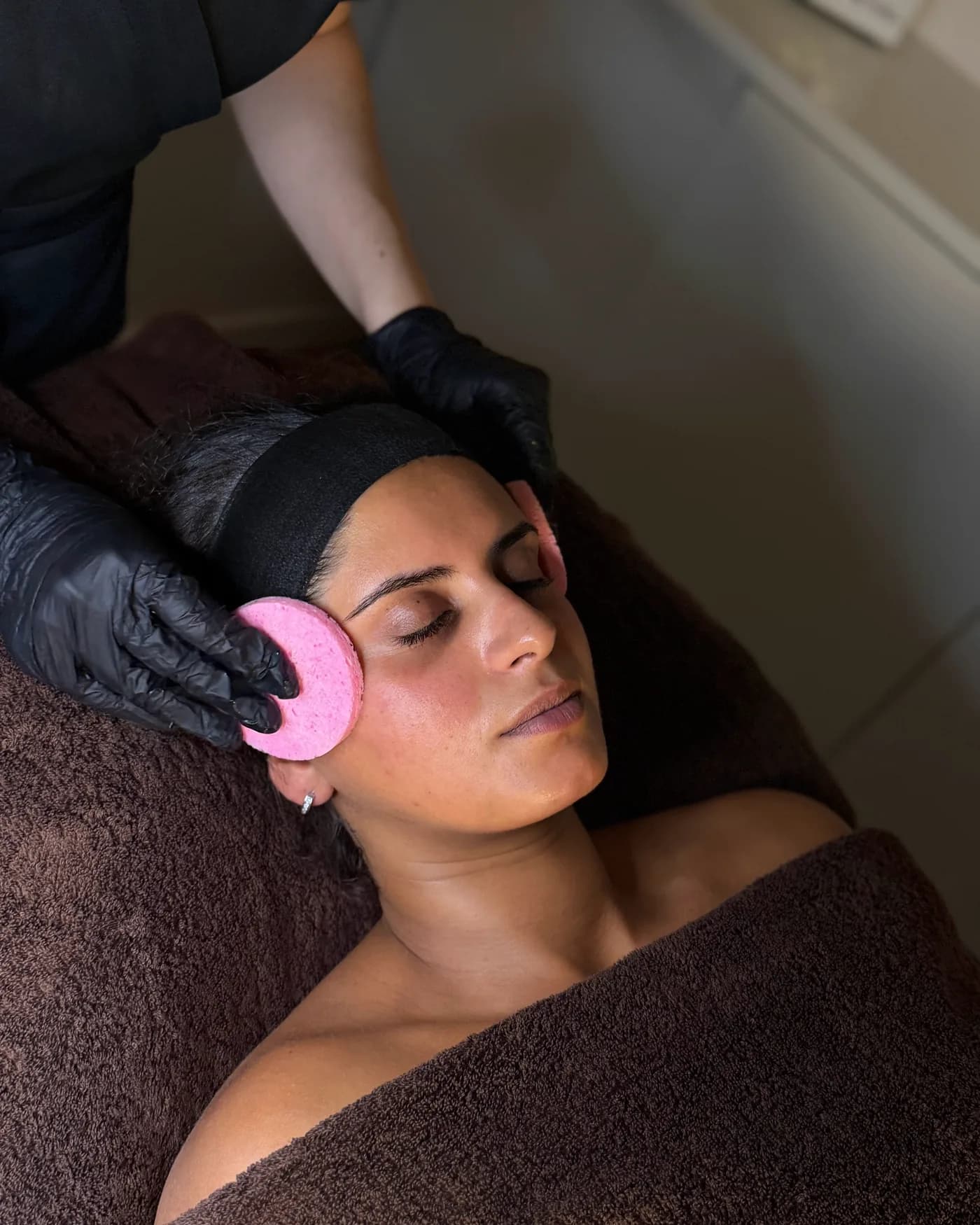
With us, mild acids and warm steam come first. The dead skin cells on the pore let go and the sebum softens. After that, a blackhead gives way with little pressure.
Pressing is done straight and with care
A specialist sees the pore up close and from the right side. If something sits too deep, it stays until next time.
Inflamed spots are left alone
Those are not extracted. If you have a lot of them, an Acne treatment is a better fit than a cleanse.
The skin is calmed afterwards
After the extractions comes care that calms the skin. Where work was done, the skin can be red for a few hours.
What does it cost to have blackheads removed?
Removing blackheads is usually part of a facial cleanse. These are our prices, as they currently appear on our price list.
| Topic | Price at Moons | Duration | Best for |
|---|---|---|---|
| Quick cleansing | €59.00 | 45 minutes | In between, or if you want to get to know us |
| Full cleansing | €75.00 | 60 minutes | Lots of blackheads. With a cooling mask and a short massage |
| Acne treatment | €75.00 | 50 minutes | Spots among the blackheads. With LED therapy |
| First peel | €69.00 | 50 minutes | Keeping pores clear for longer after a cleanse |
You pay per session, afterwards in the salon. All prices are on the prices page.
Do they stay away, and how often should you have it done?
A pore that has been emptied fills up again over time. Your skin keeps making sebum. How quickly that happens varies from person to person. For maintenance, a cleanse once every four to six weeks works well. If you have a lot of them, we schedule the first two a little closer together.
Between two cleanses, your routine at home determines how long your skin stays calm. If you cleanse gently and use salicylic acid, you'll notice there is less to do each time.
If they keep coming back in the same place and in large numbers, or more and more spots appear among them, there's more going on than a clogged pore. You can read about that under blemish-prone skin and in acne treatment.
Good to know about blackheads.
The black dot isn't dirt
The plug darkens through contact with the air. Scrubbing doesn't remove it and only irritates your skin.
Oily skin needs a cream too
If you dry your skin out, it starts making more sebum. A light cream keeps it calmer than applying nothing.
A scrub doesn't remove blackheads
Grains work on the surface, and the blockage sits deeper. A gentle scrub does help dead skin cells come loose. Use it one to three times a week, depending on your skin.
They can be on your back too
The skin on your back and chest makes a lot of sebum. Change out of sweaty clothes after exercise and wash your back with a mild cleansing gel. Our cleanses are for the face.
When it's no longer a blackhead.
If the spots become red, swollen and painful, there are deep lumps under your skin or they leave scars, see your GP. The same applies to a bump that grows, bleeds or doesn't go away, and to a blockage in your ear or near your eye. If a child has a lot of blackheads, have the GP take a look.
Frequently asked questions about blackheads
What are blackheads?
Blackheads are pores clogged with sebum and dead skin cells. If the pore is open, you see a dark dot. If a layer of skin covers it, it's a small white bump. The technical term is comedones.
Why is a blackhead black?
The top of the plug darkens through contact with the air. So it isn't dirt, and washing or scrubbing won't get it off.
What's the difference between blackheads and sebaceous filaments?
A blackhead is a blockage. A sebaceous filament is a normal part of the pore, along which sebum flows out. Sebaceous filaments are small grey dots, evenly spread over your nose. They always come back and don't need removing.
Is it okay to squeeze blackheads?
Better not. On skin that hasn't been prepared, you push part of the plug deeper into the skin. That causes inflammation, and sometimes a dark mark or a small pit. If you do it anyway, do it after a shower, with tissues around your fingers and without your nails.
How do you remove blackheads on your nose?
First check that they aren't sebaceous filaments. Real blackheads are best removed during a facial cleanse. At home, gentle cleansing and salicylic acid help prevent new ones.
Can a beauty therapist remove blackheads?
Yes. That's called extraction and it's the core of a facial cleanse. At Moons we first soften the skin with mild acids and steam, and then remove blackheads by hand.
What does it cost to have blackheads removed?
At Moons in Enschede the 45-minute Quick cleansing costs €59.00 and the one-hour Full cleansing €75.00. Elsewhere the price may differ.
Does having blackheads removed hurt?
The extractions can be a little tender, especially around the nose. Because the skin is softened first, blockages give way with little pressure.
How often should you have blackheads removed?
For maintenance, once every four to six weeks works well. Pores fill up again over time, because your skin keeps making sebum.
Do nose strips help against blackheads?
They remove the tops of sebaceous filaments and loose blackheads, so your nose looks smoother for a while. After a few days to weeks it's back. The strip also pulls at your skin, so don't use it often.
Does steaming help against blackheads?
Steam makes your skin supple and the sebum softer. It doesn't make blackheads disappear. Keep your distance and keep it short, because hot steam causes redness.
Is a comedone extractor bad for your skin?
The tool itself isn't. It goes wrong if the skin hasn't been prepared, if you press too hard or if the tool isn't clean. Then you get red marks, and if it keeps happening, small scars.
How do you prevent blackheads?
Cleanse gently twice a day, remove make-up and sunscreen properly in the evening, use salicylic acid a few times a week and choose a light cream. Washing more often or harder doesn't help.
Does warm water open pores and cold water close them?
No. A pore has no muscle and can't open or close. Warmth makes sebum softer, and an empty pore looks smaller. That's the whole effect.
Does a peel help against blackheads?
A chemical peel loosens dead skin cells, so pores clog up less quickly. It doesn't remove existing blackheads. That's what the cleanse is for. The two complement each other.
Are blackheads the same as acne?
Blackheads are the mildest form. They aren't inflamed. If red, painful spots appear as well, it's called acne. With a lot of inflammation, or deep inflammation, your GP is the first step.
From reading to doing