
In brief
- Cleanse your face thoroughly in the evening and gently in the morning. If you cleansed well in the evening, lukewarm water is often enough in the morning.
- Choose a cleanser that suits your skin. If your skin feels tight and squeaky clean after washing, it is too strong.
- If you wear make-up or sunscreen, double cleanse: first something that dissolves them, then your usual cleanser.
- What is stuck in your pores won't come out at home. That's what a facial cleanse in the salon is for, at Moons in Enschede from €59.00.
Written by Nilay, owner and beauty therapist at Moons BeautyUpdated on
How often should you cleanse your face?
In the evening you cleanse thoroughly. That takes off make-up, sunscreen, sebum and the dirt of the day, and your skin can recover overnight. In the morning, gentle is enough. If you cleansed well in the evening, lukewarm water is often all you need.
Oily skin, or skin that had a rich cream overnight, usually does need a mild cleanser in the morning. Cleansing hard twice a day is too much. That breaks down your skin's protective layer, and your skin then makes more sebum and becomes irritated.
If you have exercised, give your face a quick wash as well, so sweat and sebum don't block your pores.
Which cleanser suits your skin?
Choose by what your skin needs. A cleanser doesn't have to foam a lot to do that. These are the cleansers from our shop, by skin type.
Oily skin
A cleansing gel that takes sebum away without stripping your skin. The Face Wash Oily Skin is made for normal and oily skin, with salicylic acid, which also works inside the pore.
Normal or dry skin
A mild cleansing gel or a cleansing milk. The Face Wash Flower Extracts cleanses without drying. The Hyaluronic Cleansing Milk cleanses and hydrates at the same time, and you remove it with a cotton pad and water.
Sensitive skin
As little rubbing as possible and as few ingredients as possible. The Micellar Cleansing Water is made for delicate and sensitive skin and removes make-up and dirt in one step. After a cleansing milk, the alcohol-free Lotion Azulene finishes the cleanse.
Make-up and sunscreen
Start with something that dissolves make-up, such as the rich Crème Demaquillante, which also takes off heavy make-up, or the Lait Demaquillant. Then follow with your usual cleanser.
How do you cleanse your face properly?
If your skin feels tight and squeaky clean after washing, your cleanser is too strong. A good cleanser leaves your skin clean and supple.
This is how you cleanse your face:
- Wash your hands, so you don't spread dirt onto your face
- Wet your face with lukewarm water
- Massage the cleanser over your skin in small circles with your fingertips, along your hairline and jawline too
- Rinse well, or remove a cleansing milk with a cotton pad and water
- Pat your skin dry with a clean towel, and don't rub
- Apply your skincare while your skin is still slightly damp
What is double cleansing?
Double cleansing means two rounds. First you use something that dissolves make-up, sunscreen and sebum, such as a cleansing oil, cream or milk. Then comes your usual cleanser for the skin itself.
It is mainly useful in the evening, when you have make-up or sunscreen on. Waterproof mascara and sunscreen don't dissolve well in a single round, and whatever stays behind can block your pores. If you have nothing on your skin, one round is enough.
In the salon we always double cleanse too, before any acids or steam go on your skin. That way everything after it works equally well everywhere.
Micellar water, wipes and brushes: what do they do?
There's a lot for sale to cleanse your face with. This is what they do and what to watch out for.
| Topic | What it does | What to watch out for |
|---|---|---|
| Micellar water | Removes make-up and dirt in one step, around your eyes too | Handy and mild. With heavy or waterproof make-up, cleanse once more afterwards |
| Face wipes | Remove most of your make-up | You rub over your skin, and something is often left behind. Fine for on the go, better not every day |
| Cleansing brush or device | Scrubs away dead skin cells while you cleanse | On sensitive or dry skin it irritates quickly. Don't use it every day, and clean it well |
| Flannel | Helps remove a cleansing milk and exfoliates lightly | Use a clean flannel every time |
| Soap | Cleanses strongly | Often too strong for your face. If your skin feels tight afterwards, too much oil has been removed |
| Water only | Rinses away sweat and a little sebum | Enough in the morning if you cleansed well in the evening. It won't get make-up and sunscreen off |
When should you have your face cleansed in the salon?
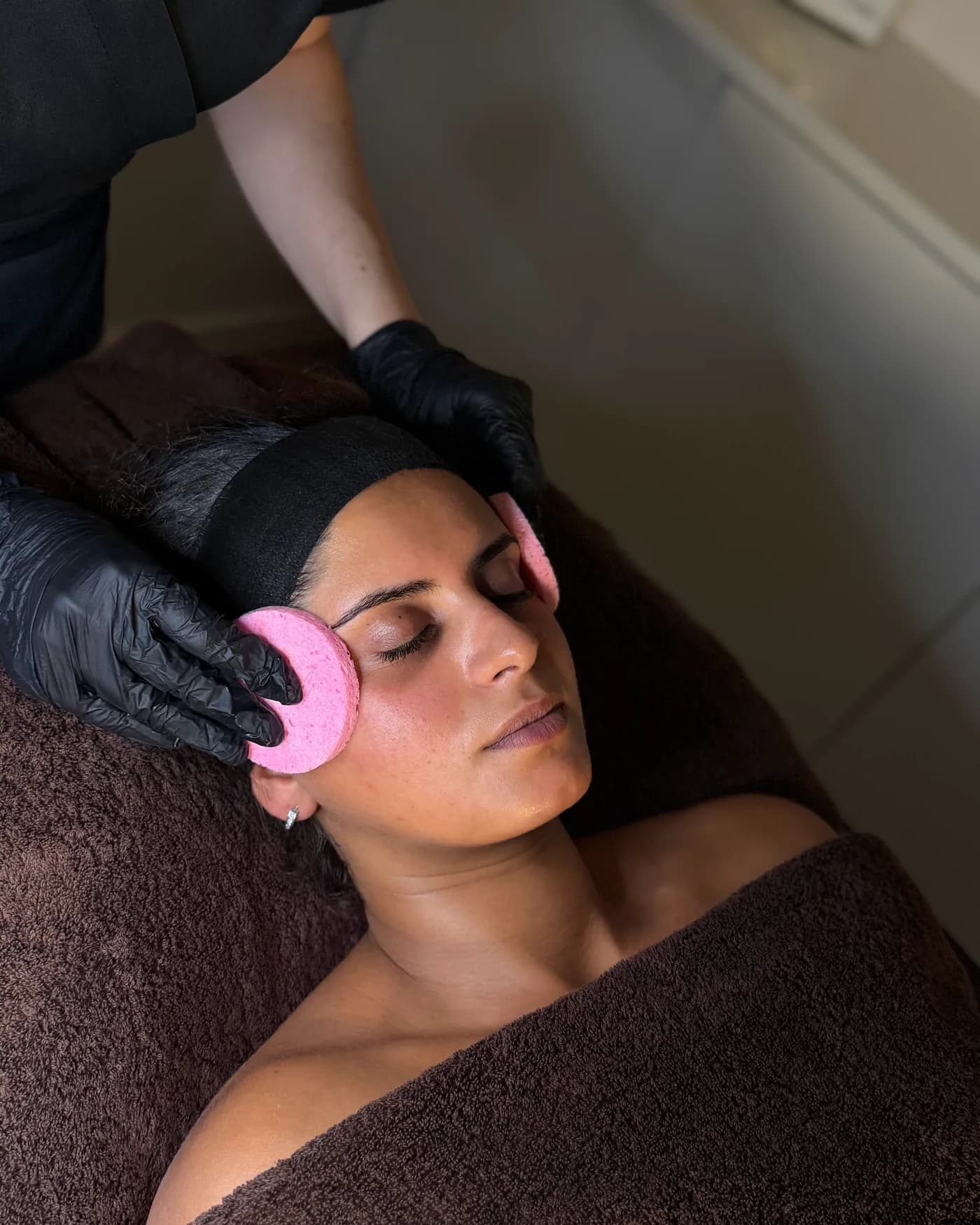
A cleanser removes what sits on your skin. If a pore is clogged with sebum and dead skin cells, you won't get that out at home. That's what a facial cleanse in the salon is for.
At Moons we first soften your skin with mild acids and steam, and then remove blackheads by hand. The Quick cleansing takes 45 minutes and costs €59.00. The Full cleansing takes an hour and costs €75.00, with a cooling mask and a short massage.
For maintenance you come in once every four to six weeks. How to recognise blackheads and what helps at home is explained under removing blackheads.
Spots after a facial cleanse?
That can happen. What sat deep under your skin sometimes still comes to the surface in the weeks after a cleanse. Leave a spot like that alone and it will clear by itself.
On the day itself your skin may be red for a few hours where we have worked. Better to skip make-up that day, and leave exercise and the sauna until the next day. Sweat and heat can irritate your freshly emptied pores.
Good to know about cleansing.
A cleanser doesn't need to foam
Foam says little about how well something cleanses. A cleansing milk doesn't foam and still removes everything.
Lukewarm water is the most pleasant
Hot water rinses away the oils that keep moisture in your skin, and cold water doesn't close your pores. Lukewarm water cleanses and leaves your skin in peace.
Your neck is part of it
The skin on your neck gets just as much make-up, sunscreen and sweat. Include it when you cleanse.
For men too
Skin that makes a lot of sebum or sits under a beard benefits from a mild cleanser, in the evening and after exercise. Cleanse your skin before shaving too, so the razor glides better.
Frequently asked questions about cleansing your face
How often should you wash your face?
Thoroughly in the evening and gently in the morning. If you cleansed well in the evening, lukewarm water is often enough in the morning. Cleansing hard twice a day actually unsettles your skin.
Is washing your face with just water enough?
In the morning it often is, if you cleansed well the evening before. In the evening, water won't get make-up, sunscreen and the day's sebum off. That's when you need a cleanser.
Which cleanser is good for oily skin?
A cleansing gel that takes sebum away without drying your skin out, for example one with salicylic acid. Don't strip away too much oil, or your skin will actually start making more sebum.
Which cleanser is good for dry skin?
A mild cleansing gel or a cleansing milk that leaves your skin supple. A cleanser that foams a lot and leaves your skin feeling tight is too strong.
What is micellar water?
Water with tiny particles, micelles, that bind make-up and dirt to themselves. You wipe it over your skin with a cotton pad, around your eyes too. It is mild and handy. If you wear heavy make-up, cleanse once more afterwards.
Do you need to rinse off micellar water?
It isn't always necessary. The micellar water from our shop is made to be used without rinsing. If your skin reacts easily, rinse briefly with lukewarm water afterwards.
Are face wipes bad for your skin?
They're handy on the go. Better not every day, though: you rub over your skin, and make-up and cleansing product are often left behind.
Is a facial cleansing brush good for your skin?
On robust, oily skin you can use one now and then. On sensitive or dry skin it irritates quickly. So don't use it every day, and clean it well after use.
Should you wash your face with warm or cold water?
With lukewarm water. Hot water dries your skin out and makes sensitive skin go red, and cold water doesn't close your pores.
What is double cleansing?
Two rounds: first something that dissolves make-up and sunscreen, such as a cleansing oil, milk or cream, then your usual cleanser. It's mainly useful in the evening, when you have make-up or sunscreen on.
Can you use soap on your face?
Better not. Ordinary soap is often too strong for your face, and your skin feels tight afterwards. A mild cleansing gel or cleansing milk suits it better.
Do you need a toner after cleansing?
You don't have to. After a cleansing milk, a lotion finishes the cleanse and removes the last traces, such as the alcohol-free Lotion Azulene for dry and sensitive skin.
How often should you have your face cleansed by a beauty therapist?
For maintenance, once every four to six weeks. If you have a lot of blackheads, we schedule the first two cleanses a little closer together.
What does a facial cleanse cost?
At Moons in Enschede the 45-minute Quick cleansing costs €59.00 and the one-hour Full cleansing €75.00. You pay afterwards in the salon, by card or in cash.
Why do you get spots after a facial cleanse?
What sat deep under your skin can still come to the surface in the weeks after. Leave it alone and it will clear by itself. On the day itself, it's best to skip make-up, exercise and the sauna.
From reading to doing