In brief
- Redness in your face has many causes. Usually it is flushing or sensitive skin that reacts quickly. Sometimes thread veins (couperose) or rosacea are behind it.
- Flushing fades within an hour. If the redness stays, with fine veins or bumps, have your GP look at it.
- At home, doing less helps most: lukewarm water, a mild cleanser, a simple cream and mineral sun protection.
- Visible veins can be reduced with laser or IPL, at a clinic or by a dermatologist. We don't do that at Moons.
- For skin that quickly turns red, stings or feels tight, there is the Redness treatment with LED at Moons in Enschede, for €75.00.
Written by Nilay, owner and beauty therapist at Moons BeautyUpdated on
Where does redness in your face come from?
Your skin turns red when more blood flows through the small blood vessels just under your skin. That happens to everyone, for example when you're warm, when you exert yourself or when something startles you. In some people you see it sooner than in others. Fair, thin skin lets the colour through more easily.
If you turn red from things other people don't notice at all, such as a new cream or going from the cold into a warm room, you often have sensitive skin. The protective top layer then lets too much through, so your skin reacts more quickly. Why that happens and what you can do about it is explained under sensitive skin.
If the redness stays, even when you're sitting quietly indoors, or you see fine red veins on your cheeks and nose, it may be thread veins or rosacea. Those are two different things. The difference is explained below.
The sun, a product your skin can't tolerate or a treatment can also make your skin red for a while. That usually fades again within a few hours to a few days.
Flushing, thread veins or rosacea: what is the difference?
They look alike, and yet each one needs something different. Your GP determines what it is in your case.
| Topic | What it looks like | What is going on |
|---|---|---|
| Flushing | Your cheeks colour up with heat, exertion, nerves or a glass of wine, and it fades within an hour | For a moment more blood flows through your face. That is simply how your skin works |
| Sensitive skin | Patchy redness, often with stinging or burning when you put something new on it | The top layer of your skin lets too much through, so it reacts more quickly |
| Thread veins | Fine red veins on your cheeks, nose or chin that don't fade | Small blood vessels just under your skin have widened and stay visible |
| Rosacea | Redness that stays, in the centre of your face, often with bumps and sometimes with spots | A skin condition that flares up in phases. Your GP diagnoses and treats it |
| Reaction to a product | Redness, itching or small bumps shortly after you used something new | Your skin is reacting to a substance. Stop using the product, and it usually settles within a few days |
If your face swells up, you get blisters or you have trouble breathing, contact a doctor straight away.
Salon, GP or clinic: who does what?
With redness, each of them works on their own part. That way you know where to go with which question.
| Topic | What they do | Go there if |
|---|---|---|
| The salon | Calming skin that reacts quickly, and helping you find a routine that keeps it calm | Your skin quickly turns red, stings or feels tight, or you're looking for care alongside your doctor's treatment |
| GP | Looks at what the redness is and can prescribe a cream or medication | The redness stays or gets worse, or bumps, spots or visible veins appear |
| Dermatologist | Treats skin conditions such as rosacea and eczema that need more | Your GP refers you |
| Clinic with laser or IPL | Reduces visible veins with light | You want your thread veins to be less visible |
Check beforehand with the clinic and with your health insurer whether a treatment for thread veins is covered.
What helps at home for a red face?
With redness, doing less often helps more than adding something new. These are the things that make the difference.
Wash your face with lukewarm water
Hot water and big changes in temperature make your cheeks colour up. Wash with lukewarm water, pat your skin dry with a clean towel and don't rub.
Go back to three products
A mild cleanser, a simple cream and sun protection. Keep that up for two weeks, and you'll see how your skin does on its own. The Sensitive Skin Care Face Cream is made for skin that quickly turns red: fragrance-free and with ceramides.
Choose mineral sun protection
Sun makes redness worse. Sun protection with zinc oxide or titanium dioxide stings less on sensitive skin. Apply it every morning as the last step, even when the sky is grey.
Keep track of when it comes up
For a few weeks, write down when you turn red: after a shower, after a glass of wine, after exercise or after a new product. Then you'll see what plays a part for you.
Cool your skin when it flares up
If your face suddenly turns warm and red, put a cool, damp flannel on your cheeks. Ice or a cold pack straight on your skin is too cold.
How do you cover up redness with make-up?
Green sits opposite red on the colour wheel. A green corrector or primer, applied thinly to the red patches, makes the colour more neutral. Your usual foundation or concealer goes on top. A thin layer works better than a thick one, because a thick layer is exactly what stands out.
Choose fragrance-free make-up, and try anything new on a small patch of skin for a few days first. Remove your make-up gently in the evening, for example with a micellar water for delicate and sensitive skin, and don't rub.
What does a beauty therapist do for redness?
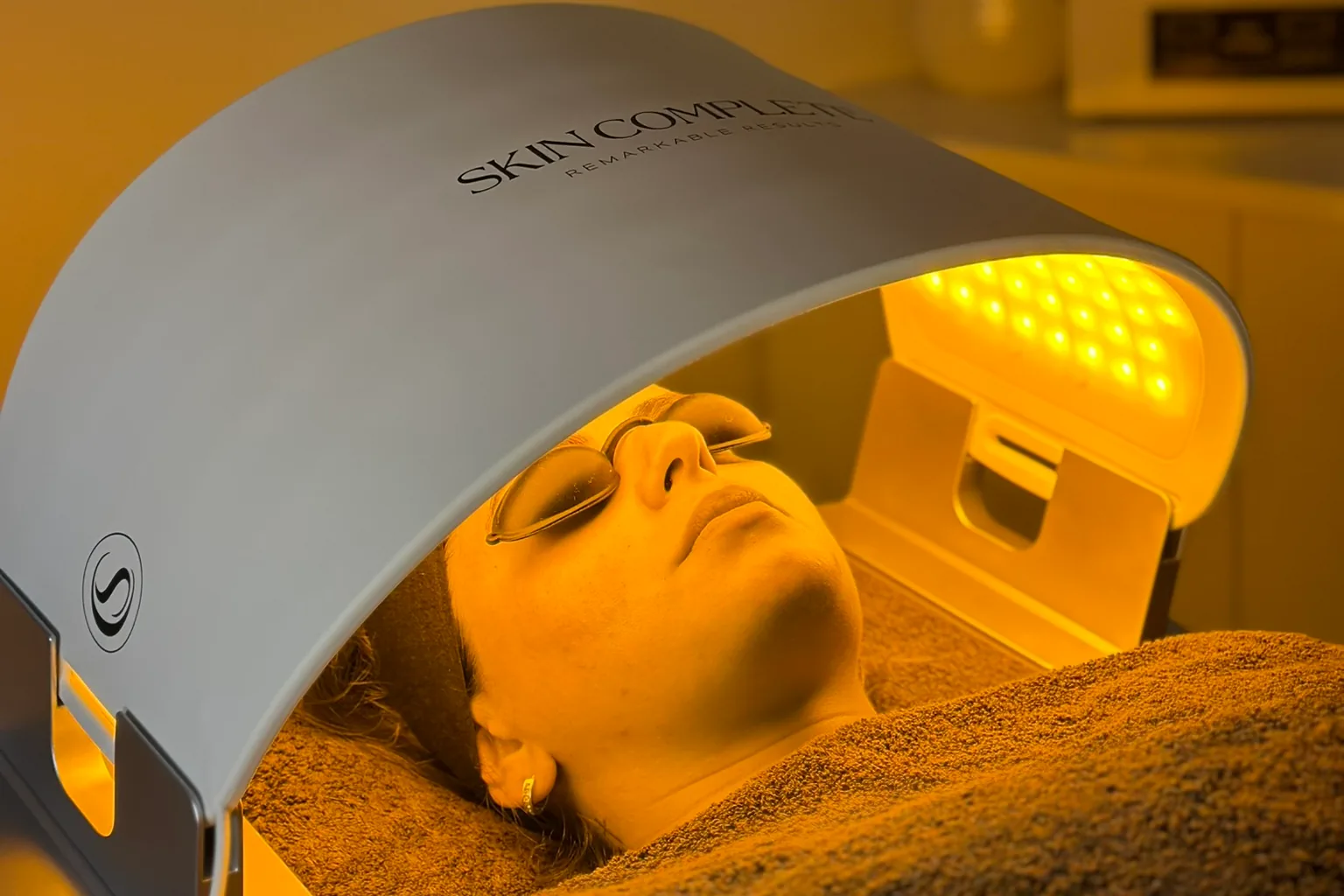
A beauty therapist calms skin that reacts quickly and helps you find a routine that keeps it calm. At Moons we do that in the Redness treatment, an hour for €75.00. We work mildly and skip steam, because heat actually brings redness on. After a calming serum and a gel mask you lie under the LED light for a while.
For skin that stays calm, you usually come three to five times, every four weeks. After that, a treatment every six to eight weeks keeps your skin in balance.
We don't treat thread veins. Visible veins can be reduced with laser or IPL, and for that you go to a clinic or a dermatologist. Rosacea belongs with your GP. If you're being treated there, a calming appointment with us can sit alongside it, in consultation.
Red after a treatment: how long is normal?
After many treatments your skin is red for a while. This is how long that usually lasts with our treatments.
| Topic | How long | What you do |
|---|---|---|
| Redness treatment | A slight flush that usually fades within an hour | Don't start anything new in the days after |
| Facial cleanse | A few hours, on the areas where we worked | Skip make-up, exercise and the sauna that day |
| Chemical peel | A bit red and tight that day, sometimes light flaking for a few days | Leave out make-up that day and don't use a scrub |
| Microneedling | One to two days, roughly like after a sunny day | Stay out of the sun. Make-up is fine from the third day, although ideally you wait two weeks |
| Waxing | A little, and that usually fades within a few hours | Leave the area alone that day |
If the redness gets worse instead of less, or swelling, pain or pus appear, get in touch with us or see your GP.
Good to know about redness.
Alcohol and spicy food colour your cheeks
They make the small blood vessels in your face widen. With skin that quickly turns red, you see that sooner and it lasts longer.
A scrub makes redness worse
Grains and brushes rub over skin that already lets too much through. With redness, choose a mild cleanser and leave the scrub alone for a while.
Turning red after exercise is normal
Your body gets rid of its heat through your skin. Once you've cooled down, the colour usually fades by itself.
You turn red more easily in pregnancy
More blood flows through your body then, and your skin reacts more quickly. A calming or hydrating treatment is usually fine, and we keep it milder. See also skincare during your pregnancy.
When to see your GP first.
Have your GP look at your skin if the redness no longer fades or gets worse, if bumps or spots appear, or if you see fine veins on your cheeks and nose. Also go if your eyes are burning or red, or if patches itch, weep and keep coming back. If your face suddenly swells or you have trouble breathing, contact a doctor straight away. If you're already being treated, we adjust our care to that in consultation.
Frequently asked questions about facial redness
What causes redness in your face?
Usually flushing, or sensitive skin that reacts quickly to heat, cold, exertion, alcohol or a new product. If the redness stays, with fine veins or bumps, it may be thread veins (couperose) or rosacea. Have your GP look at that.
How do you get rid of redness in your face quickly?
Cool your skin with a cool, damp flannel and sit in a cooler room for a while. After that, lukewarm water and a simple cream help. If you want to cover it up, use a green corrector under your foundation.
What is the difference between thread veins and rosacea?
With thread veins, small blood vessels just under your skin have widened, so you see fine red veins. Rosacea is a skin condition with redness that stays, often with bumps, and that flares up in phases. Thread veins can be part of rosacea and also occur on their own. Your GP determines what it is.
Can thread veins go away?
Visible veins can be reduced with laser or IPL, at a clinic or by a dermatologist. We don't do that at Moons. A cream doesn't remove the veins, although they stand out less when your skin is calm.
Is a treatment for thread veins covered by insurance?
That depends on your insurance and on the reason for the treatment. Check beforehand with the clinic and with your health insurer.
Does LED therapy help with redness?
LED calms your skin and helps to reduce redness. That's why it's always part of our Redness treatment. You don't treat rosacea or eczema with it. If you take medication that makes you sensitive to light, or you have epilepsy, we skip the LED.
Which cream helps with red skin?
A simple fragrance-free cream that supports the top layer of your skin, for example with ceramides. Introduce one new product at a time and give it two weeks. In our shop, the Sensitive Skin Care Face Cream is made for dry, sensitive skin that quickly turns red.
Why do I turn red after a shower?
Hot water makes the small blood vessels in your skin widen and rinses away protective oils. So wash your face with lukewarm water, and don't shower too hot or for too long.
Why does alcohol give me red cheeks?
Alcohol widens the blood vessels in your face, so more blood flows through them. With skin that quickly turns red or with rosacea you see that sooner, and it lasts longer.
Can I see a beauty therapist if I have rosacea?
Yes, alongside the treatment from your GP or dermatologist. At Moons we then work extra mildly and leave out steam and acids. Mention it when you book, along with any medication or creams you use.
How do you cover up redness with make-up?
Apply a thin layer of green corrector or primer to the red patches. Green makes red more neutral. Your foundation or concealer goes on top. A thin layer stands out less than a thick one.
Is redness after microneedling normal?
Yes. Your skin is red for one to two days, roughly like after a sunny day. If it gets worse instead of less, or swelling or pus appear, get in touch with us.
Does cold water help with a red face?
Cooling down briefly feels pleasant. Ice-cold water and big changes in temperature actually make your skin colour up again afterwards. Lukewarm water is the most soothing for skin that quickly turns red.
Can stress cause redness?
Yes. Tension, poor sleep and a busy period increase the blood flow in your face, and sensitive skin then reacts more quickly.
What does a treatment for redness cost?
At Moons in Enschede the Redness treatment costs €75.00 for an hour, with LED therapy included. You pay per visit, afterwards in the salon.
From reading to doing
What we do with this in the salon
Redness treatment
A calm hour with serum, gel mask and LED, with price and steps.
Sensitive skin
What your skin reacts to, and how to bring it back to calm.
LED therapy
Light that calms your skin, on its own or with a treatment.
First skin appointment
We look at your skin together, and at what keeps it calm.